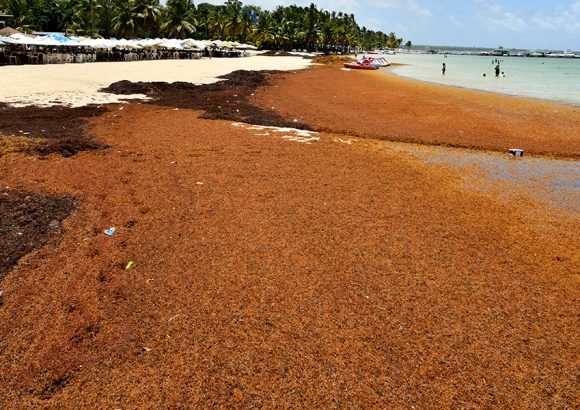
Sargassum has been spoiling Caribbean beach holidays for years, and now there's serious money behind a plan to do something more useful with it than hauling it off the sand. The Dominican Republic is getting a US$6.3 million financing and technical assistance package to help small businesses build a working sargassum economy — collecting it, transporting it, storing it and finding commercial uses for the stuff.
The money comes from a trio of backers: the European Investment Bank, the European Union and Banco de Ahorro y Crédito Adopem. Most of it — US$5.1 million — is a loan from EIB Global to Banco Adopem, underwritten by the European Commission's EFSD+ guarantee fund, and still needs sign-off from the Dominican Superintendency of Banks. It's aimed squarely at micro, small and medium-sized enterprises, which typically struggle to get long-term credit for an unproven industry like this.
The remaining US$1.2 million is a European Commission grant for technical assistance, not just to Banco Adopem but to other Dominican lenders too. The idea is to help banks and businesses identify workable projects, build financing products, and get up to speed on health, safety and environmental safeguards — the tricky part, since sargassum processing carries real risks if handled badly.
The announcement was made at the Fourth Global Gateway EU-Caribbean Conference on Sargassum in Cancún, Mexico, under the EU's "Changing the Course" initiative. There's a regional target attached, too: 660,000 tons of sargassum collected by 2027, of which 150,000 tons should come from the Dominican Republic.
For anyone who's booked a Punta Cana trip only to find brown, decomposing seaweed piled at the waterline, this matters more than it might first appear. Sargassum influxes have become a regular headache across the Caribbean, hitting tourism, fisheries and marine life, and the response so far has mostly been emergency cleanup. Shifting to a proper value chain — with drying, storage and processing that create jobs — could mean cleaner beaches and stronger coastal communities at the same time. It won't fix next season's seaweed, but it signals a longer-term effort rather than an annual scramble.