
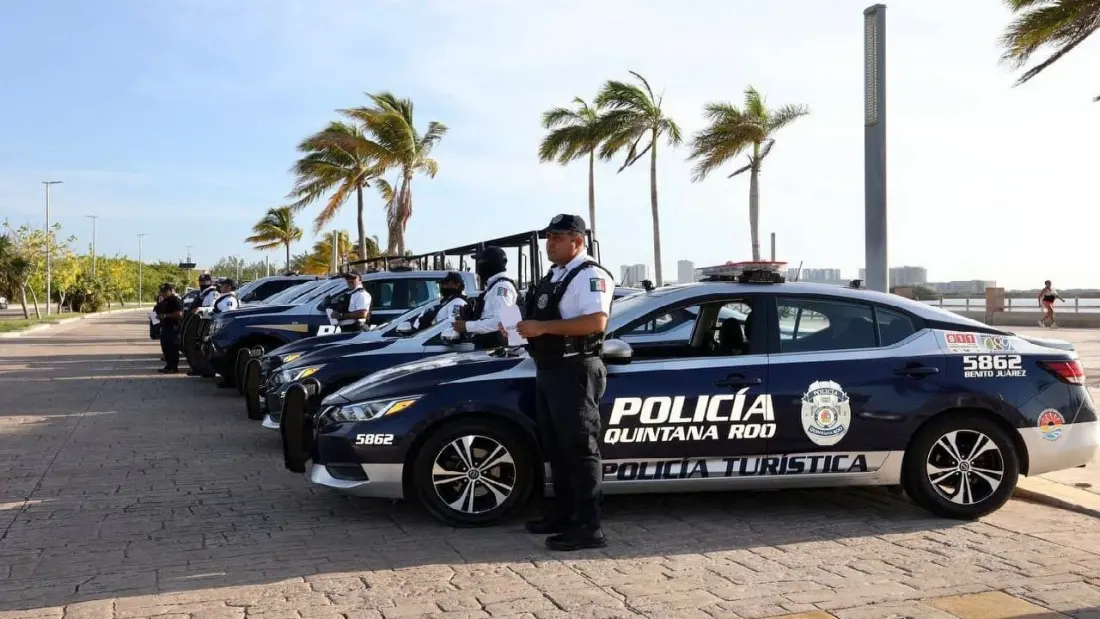
The man who until recently ran Cancun's Tourist Police is now facing federal charges for human trafficking and organised crime, in a case that raises awkward questions about security oversight in Mexico's biggest resort city.
Mexico's Attorney General's Office (FGR) has formally indicted five people — Jumilca "N", Erik "N", Eva "N", Reyna "N" and Ernesto "N" — for alleged membership of a trafficking network. Investigators from the Specialised Prosecutor's Office for Organised Crime (FEMDO), who opened the case in 2025, believe the network operated along a corridor running from Chiapas on the Guatemalan border up to Chihuahua on the US border.
The arrests followed recent search operations at three properties in Chiapas and Quintana Roo, carried out with support from the Mexican Navy and the national security ministry (SSPC). Officers seized ammunition, a long gun, passports, identity documents, credit cards and cash. The five suspects are being held in Ciudad Juárez — the men in CERESO No. 3, the women in the women's facility CERESO Femenil No. 2.
The detail that has drawn the most attention is Erik "N"'s former job: he once headed the Tourist Police in Cancun, the force that patrols the hotel zone and is meant to be the first point of contact for millions of international visitors. He was actually taken into custody last month during a separate federal drug-related search, and the trafficking charges followed.
Cancun's city government has already moved on. In March 2026, Mayor Ana Paty Peralta swore in Ulises Adrián Martínez Monzón as the new Tourist Police director under the Municipal Secretariat of Citizen Security and Transit, and he remains in the post.
Why does this matter to travellers? Cancun welcomes millions of visitors a year, and tourism security is a visible part of the city's pitch — the Tourist Police exist specifically to reassure and assist visitors. News that a former commander of that force faces charges in a federal trafficking and organised crime case doesn't mean tourists are being targeted, but it is a reminder that the institutions behind resort-town security can be more complicated than they appear. For anyone planning a Riviera Maya trip, the practical takeaway is unchanged: stick to the hotel zone and well-trodden areas, use official transport and tour operators, keep valuables low-key, and register with your embassy's traveller programme if your country offers one. Routine crime-prevention habits matter more here than headlines.
For residents and the tourism industry, meanwhile, the case is a test of whether federal investigators will keep pulling at corruption inside the very agencies charged with protecting visitors — and whether the new leadership at the Tourist Police can rebuild trust.
Story via Riviera Maya News.