Terreiro de Jesus is the square everyone crosses in Salvador's Pelourinho district — a prime people-watching spot ringed by some of the oldest church architecture in Brazil. At its centre stands the Catedral Basílica de Salvador, and while most visitors snap the facade and move on, the real story is inside.
The cathedral's Baroque interior is the kind of thing you have to stand in to believe: carved woodwork, gilded detail, paintings and religious art layered over centuries. It's one of the most striking historic churches in Bahia, and easy to pair with a wander through the surrounding colonial streets.
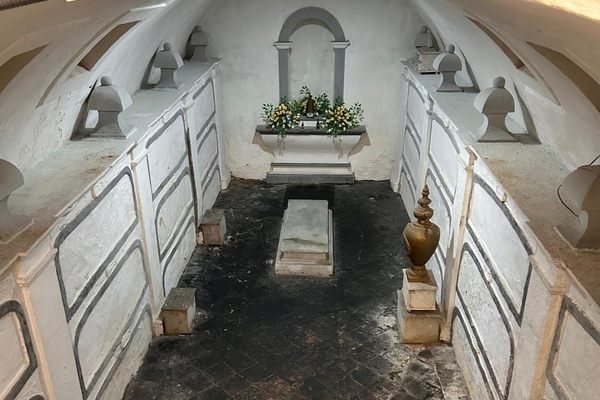
But there's a reason to slow down. Near the main altar sits the sepulchre of Mem de Sá, the third Governor-General of Brazil, buried here in the 16th century. It's surprisingly easy to miss if you don't know to look for it, which makes it feel like a private discovery. And it changes how you read the building — all that gold and craftsmanship sits on top of a colonial history that was anything but pretty. Mem de Sá's era brought harsh campaigns against Indigenous communities and the consolidation of Portuguese power, so the tomb is a tangible link to the figures who shaped early Brazil, for better and much worse.
That tension is what makes a visit here more than a photo stop. Salvador was the first capital of Brazil, and Pelourinho itself is named after the whipping post that once stood in the old slave market. Walking from the square into the cathedral, you're tracing the same threads — power, faith, exploitation, endurance — that run through the whole city. The architecture dazzles, but the building is also a witness. Treat it as both.
Practically, the cathedral slots neatly into any Pelourinho itinerary. It's open Monday to Saturday, with different hours on Sundays, so it's worth checking ahead before you plan your visit. Give it a half hour or more, and make a point of walking up to the altar area to find the sepulchre rather than admiring the nave from the doorway.
Who's it for? Anyone heading to Salvador for its famous Afro-Brazilian culture, music and food should add this to the list — the historic centre is compact, and the cathedral anchors it. If you're the kind of traveller who likes your sightseeing with a side of context, the Mem de Sá tomb is exactly the kind of detail guidebooks often skip. Go early in the day to beat both the heat and the tour groups, then reward yourself with acarajé from a street vendor nearby and some of the best live music in Brazil after dark.
Story via Atlas Obscura.