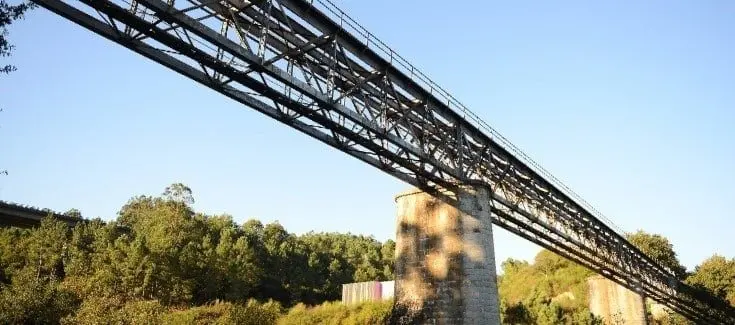
Portugal's main rail artery between Lisbon and Porto is getting a high-tech health check. Researchers at the Instituto Superior de Engenharia do Porto (ISEP), working with the University of Porto's engineering faculty, are trialling a system called Digi4RailBridges that sends camera- and laser-equipped drones over railway bridges to catch early signs of wear and tear before it turns into something serious.
The idea is straightforward: drones and fixed monitoring sensors collect data on each structure, then artificial intelligence crunches it all to spot changes and track how they develop. Everything feeds into a digital twin — a virtual model of every bridge that lets engineers watch its condition evolve and decide when an inspection or repair is actually needed, rather than waiting for something to go wrong.
Diogo Ribeiro, who leads ISEP's iBuilt digital construction centre, says the goal is to shift from reactive fixes to predicting problems and acting early. The team also wants to estimate how many years of useful life each bridge has left, which helps infrastructure managers budget sensibly and, crucially for passengers, avoid the surprise closures and replacement-bus chaos that come with emergency repairs.
ISEP bills the setup as a low-cost solution, and one that could help bridges cope with the kind of extreme weather that climate change is making more common — a real concern for a country that swings from heatwaves to violent Atlantic storms. The researchers also see potential on high-speed lines, where continuous monitoring and early warnings could keep operations safer and more reliable.
So why should a holidaymaker care? Because the North Line is the backbone of Portuguese rail travel. If you're planning to ride the train from Lisbon to Porto — one of Europe's pleasantest intercity trips — or continue up to Braga or Guimarães, the reliability of those bridges is what keeps the timetable honest. Projects like this are the unglamorous reason your train shows up on time, and they hint at smoother journeys as Portugal invests in faster, more modern rail. It's also a nice example of Porto's engineering scene quietly shaping the future of European travel.