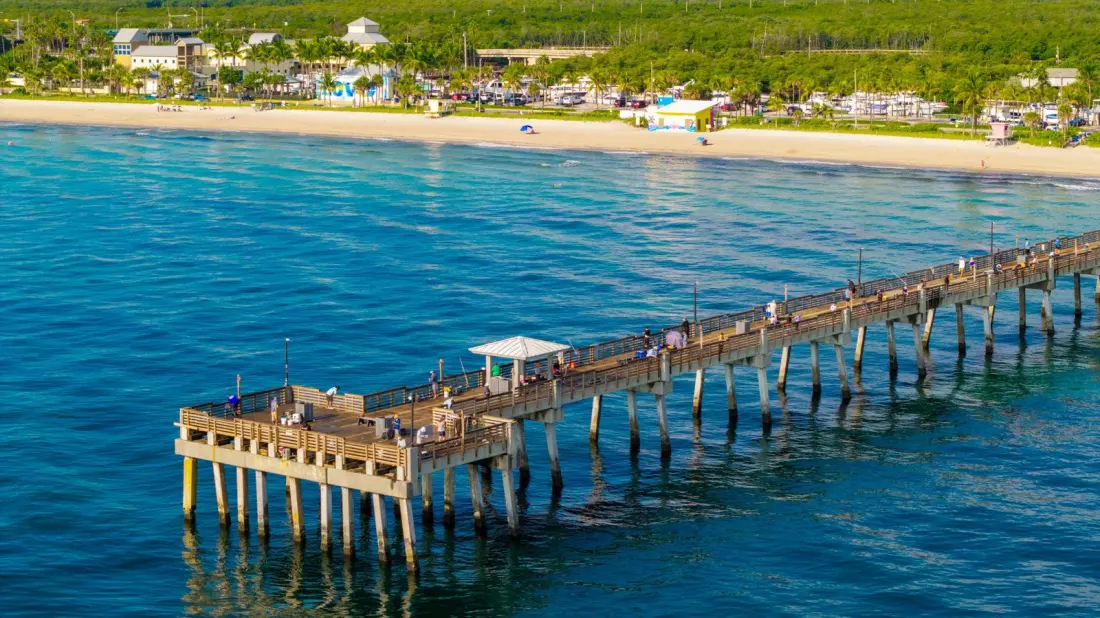
Fishing piers are holiday magnets — free or cheap access to deep water, no boat required, and a decent chance of dinner. But they also run on an unwritten etiquette code that visiting anglers trip over almost immediately, whether they're casting a line once a year or squeezing in a pier session between booked charters.
The first mistake is rod greed. Keen visitors often set up as many rods as possible along the rail, but piers are shared space and many have written limits — California law, for instance, caps anglers at two rods apiece, even on a landmark like Oceanside Pier. Even where no rule exists, a rail lined with six rods blocks everyone else from the water. Keep your footprint small and stow gear away from the rail so others can move along it.
Next: casting lanes. Picture an invisible lane running straight out in front of you and slightly to each side, and stay in it. Cross into someone else's and you risk tangled lines — a headache at best, a lost fish at worst if your neighbour is mid-fight. If fish are feeding near another section of the pier, the correct move is to wait for the action to come to you, not to lob a cast across three lanes.
Then there's the railing-as-chopping-board problem. Cutting bait or filleting your catch on the pier railing leaves a slimy, stinking mess that pulls in seagulls fast. Use the designated cleaning stations — often near the entrance or along the pier — or bring your own cutting board. And check local rules before tossing scraps: unused bait generally goes in the water, filleting may legally have to wait until a proper cleaning station.
Litter is the fastest breach of all, typically within the first ten minutes as anglers rip open packets of hooks, lures and bait. Line, wrappers and packaging blow straight into the water unless you bin them straight away. The easy fix: tie a small trash bag to your gear and pack everything out.
Finally, licences. Rules are set state by state and vary wildly. Many states sell cheap non-resident temporary licences, and there are exceptions worth knowing: Texas lets anyone fish licence-free from shore or pier in its state parks, while California requires no licence at all on public piers. But even where the licence is waived, bag limits, size limits and species rules still apply — if you can't confidently identify the fish or measure it against the limit, put it back.
Why it matters: a little homework turns a frustrating, fish-wrecking first hour into a smooth one, keeps locals friendly, and can save you a fine. If fishing is even a side dish on your holiday, check the pier's posted rules, sort your licence online before you fly, and pack a trash bag with the tackle.