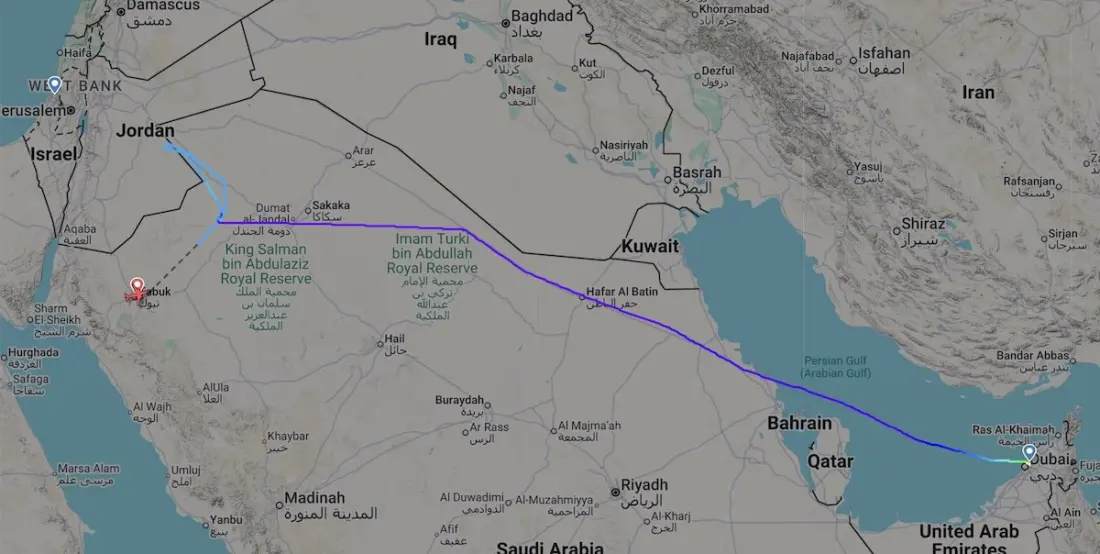
A first officer working a routine Dubai–Tel Aviv flight tried to kill his captain and crash the plane into Ben Gurion Airport's terminal — and new reporting shows just how long the plan had been in motion.
The first officer, Hamam al-Hammami, an Omani national, attacked the captain mid-flight using the cockpit's emergency axe after getting up to pray at the back of the flight deck. The injured captain managed to open the cockpit door, and passengers stepped in to subdue him. He is now in custody in the UAE.
Details emerging via Reuters suggest the plot was anything but impulsive. Al-Hammami had reportedly been planning the attack before he even applied to flydubai, deliberately choosing the airline because it flies to Israel up to ten times a day. His plan was chillingly simple: operate the flight normally, then divert the aircraft into the terminal seconds before landing, maximising casualties on the ground. That also explains why he didn't just lock the captain out of the cockpit — a hijack alarm or interception would have drawn attention. He wanted the flight to look completely routine until the final moments.
He had reportedly come close once before. Earlier this year, while operating another Tel Aviv flight, he got cold feet at the last minute, possibly because he recognised someone onboard. Notably, his previous employer, Oman Air, had already banned him from flying after discovering his radical views — yet he still passed flydubai's background checks, which the airline says it did perform.
Two security questions now loom. First, should there be a shared industry database flagging pilots deemed high-risk by previous carriers, rather than leaving each airline to start from scratch? Second, Israel's agreement with flydubai reportedly required crews to come only from countries with relations with Israel. Israel received the crew manifest and knew an Omani national was operating the flight, suggesting a verification failure on the Israeli side — a striking lapse for a country known for its security apparatus. It's not yet clear whether the pilot acted alone.
For anyone flying the Dubai–Tel Aviv route, the real takeaway is that this disaster was averted by people, not systems: a wounded captain who kept his head, and passengers who didn't hesitate. Hundreds of lives on the ground at Ben Gurion were likely saved alongside those in the air. Investigators will now be under pressure to fix the screening gaps that let a known radicalisation case slip from one airline into another airline's cockpit.