
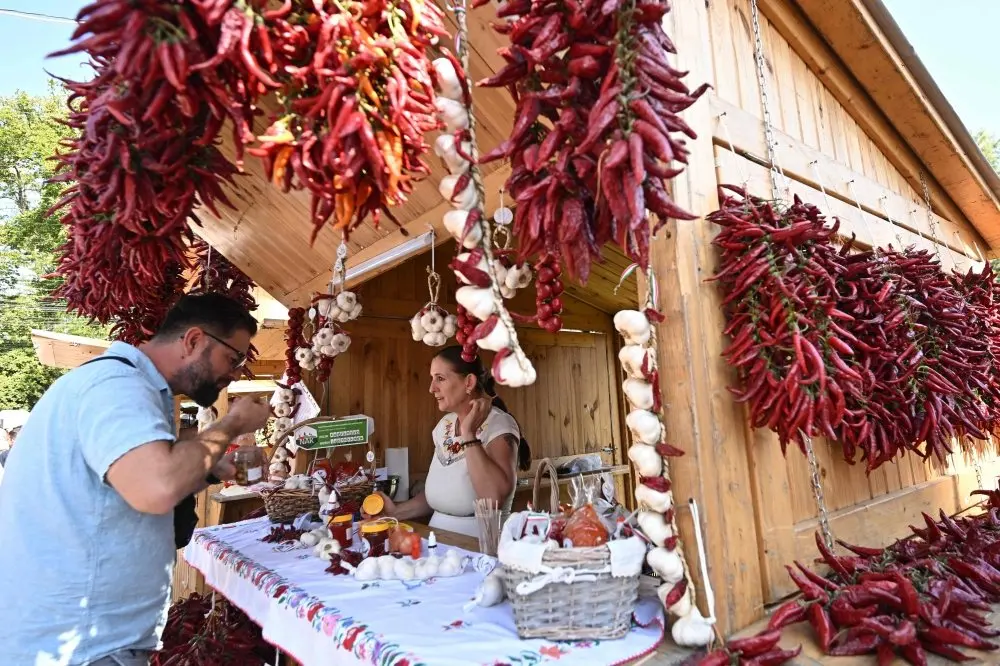
In Kalocsa, southern Hungary, the smell of goulash hangs over the autumn fair — but the spice that makes it happen is under real pressure. Farmers Nikoletta Pajsan Nagy and Laszlo Pajsan worked 20-hour days through Europe's driest summer on record to bring in their red peppers, most of it without irrigation because power lines cross their two-and-a-half hectares. Against the odds, the crop came in bigger and better than before — but their story is the exception.
The numbers tell a blunt story. Hungarian paprika cultivation peaked at 13,029 hectares in 1979; by 2024 it had shrunk to 1,410 hectares. Small producers are caught from every direction: cheap imports from China and South America undercut them, droughts and heatwaves are getting longer and harsher, new pests and diseases are spreading, and there aren't enough hands to pick peppers, which still must be harvested by hand. Seller Agnes Toth remembers when her family farmed six hectares; now it's three, and nobody in the family can live off it — she teaches, her brother fights fires.
Peppers actually arrived in Hungary in the 16th century from the Americas, finding a home on the fertile river plains around Kalocsa and Szeged. Both towns now hold EU protected designation of origin status for the spice, which became a marker of Hungarian identity in the 19th century alongside folk costume and folk art. Ask locals and they'll tell you plainly: paprika isn't just an ingredient, it's the flavour of the national kitchen — in beef stews, fish soups and everything in between.
For travellers, this matters because the tradition is becoming rarer. Younger Hungarians cook fewer traditional dishes, and each bad harvest pushes more small growers out. If you want to taste paprika at its source, the Kalocsa and Szeged regions are where it still lives: the annual town fair each autumn fills the streets with strings of dried peppers, cooking contests and cauldrons of stew. Visiting a local producer, buying spice directly at markets, and eating classic dishes where they were invented are small ways to support a culinary heritage that's genuinely at a crossroads. Few food traditions anywhere are this distinctive — or this fragile.