A long-distance hiker sets out from Toyama on the Sea of Japan and, 19 days later, walks out of the mountains onto the Pacific coast at Shizuoka. That's the premise of a 250-mile coast-to-coast trek through the Japanese Alps, and the first instalment of the story is a raw reminder that Japan's most famous mountains are anything but a gentle stroll.
The trip began on August 6 in brutal heat — 105°F on the roads out of Toyama. What saved the day, repeatedly, was the famous generosity of strangers: bean-paste sweets handed over at a grocery store, homegrown cucumbers and cherry tomatoes pressed on the walkers by a woman in the countryside. Classic trail magic, Japanese style.
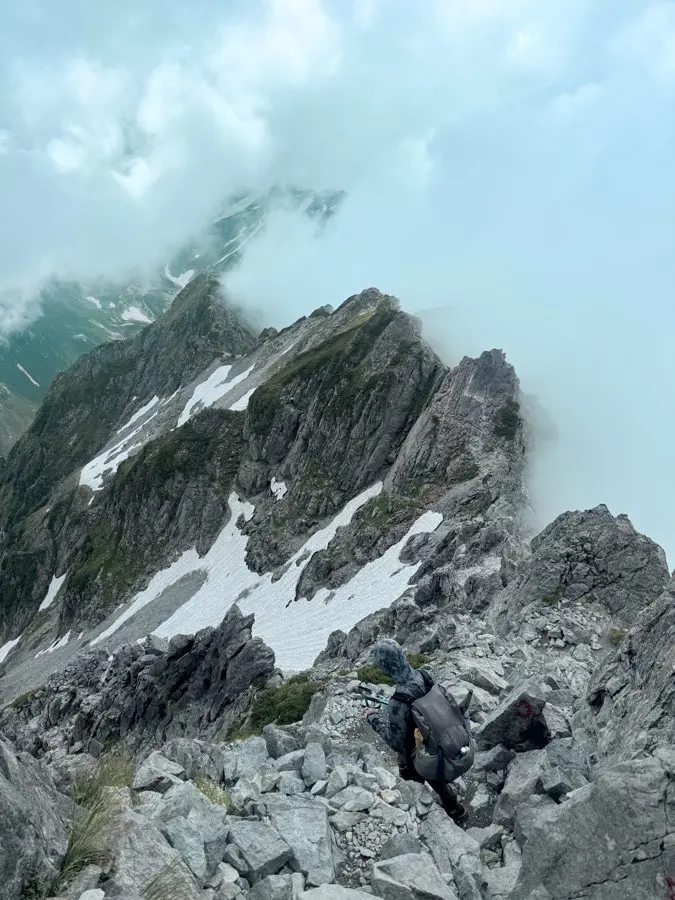
Then came the mountains, and they did not mess about. Day three delivered the hardest section of the entire route: Mt. Tsurugi, widely considered Japan's most technical and dangerous climb. The route involves scrambling on all fours, hauling up fixed chains and ladders across exposed ridgelines — this on a peak where 345 people died between 1959 and 2016. Add a torrential downpour mid-climb and the whole thing becomes a serious mountaineering exercise, not a walk.
Two quirks of Japanese mountain culture shape every day of a trip like this. First, hikers traditionally start in the middle of the night to summit at sunrise — expect headlamps passing your tent from 2 a.m. and a campground fully awake by 4:30. Second, camping is only allowed in designated areas, so privacy is scarce and the early-riser noise is simply part of the deal. The payoff comes at the mountain huts: hot meals like curry rice and beef bowls, beer, and — a genuine luxury after a soaking — drying rooms for your clothes.
The lows are real too: sleep deprivation, a wet and rocky trail that slows you to a crawl, a twisted ankle, humidity that means drying your tent every sunny morning, and news of an approaching tropical storm by the end of the first week. There are also bear-protected campgrounds with electric fences, and snowfields to cross even in August. None of this is a reason to skip Japan — it's a reason to respect it.
Why should a holidaymaker care? Because this route bundles everything people love about Japan into one line: tiny farming villages, sacred peaks, hot springs, mountain hut food, and kindness from strangers — all between two very different coastlines. It's a blueprint for travellers who want more than the Tokyo–Kyoto circuit, whether that means hiking a section of the Alps, staying in a hut overnight, or building a trip around Japan's lesser-known long-distance paths. Just be warned: if you go anywhere near Mt. Tsurugi, the chains and ladders are not optional, and neither is rain gear.
Story via The Trek.