
Mexico packs deserts, jungles, alpine valleys and 6,000 miles of coastline into one country, so the weather you'll live with depends less on the calendar than on where you plant yourself. Anyone weighing up a long stay, a remote-work base or a retirement spot should start with two factors: latitude and, above all, elevation.
The colonial cities in the mountains — San Miguel de Allende, Guanajuato, Oaxaca and the like — sit a mile or more above sea level and enjoy mild, spring-like conditions most of the year. The trade-off is altitude and cold snaps: winter nights can drop sharply once the sun goes down, and mornings in late autumn and early spring can feel properly chilly, so fireplaces and wood stoves aren't just decorative. Mexico City and Guadalajara share the same dynamic. Newcomers arriving from low-lying home towns should also give themselves a few weeks to adjust to thinner air, and note that cooking and baking behave differently at 7,000 feet.
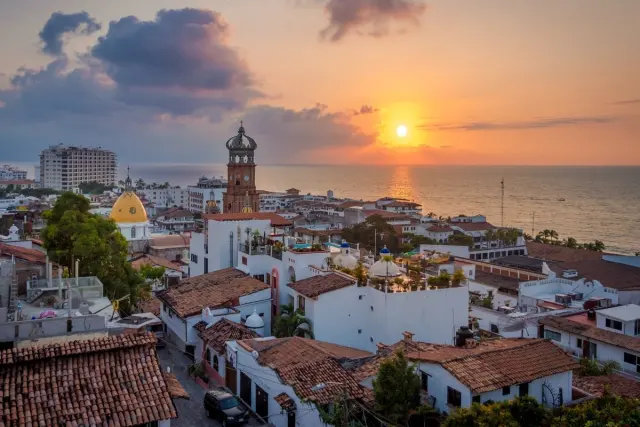
Head for the coast instead and the equation flips. Sea-level towns on the Pacific, the Gulf, the Caribbean and the Yucatán are hot and humid — often uncomfortably so — from April through October, when air conditioning or a strong sea breeze stops being a luxury. The sweet spot is mid-November to mid-February, when days are gloriously warm without being punishing. That's exactly why so many snowbirds overwinter on the Mexican coast, then head home before temperatures climb again from late February.
Wherever you choose, Mexico runs on a rainy/dry rhythm rather than four seasons. Rains arrive around May or June and taper off by October or November, typically arriving as fierce late-afternoon or overnight downpours that leave mornings cool, fragrant and washed clean. Many residents prefer the green season for its drama and lower prices. The main hazard window is hurricane season, roughly July to October, which chiefly threatens coastal zones — the Yucatán peninsula, Gulf coast, Pacific resorts and Baja California — though big storms can push heavy rain inland, causing flooding and tricky driving on mountain roads.
The practical takeaway: don't pick a Mexican destination on reputation alone. A 'sunny Mexico' search means very different things in Guadalajara and Cancún. If you want mild year-round temperatures and don't mind cool winter nights, shortlist the highlands. If you're escaping a northern winter and can tolerate (or afford air conditioning for) a steamy summer, the coastal plains will deliver. And whichever you choose, visit during the season you plan to stay — a February week in Mérida tells you nothing about September there.