
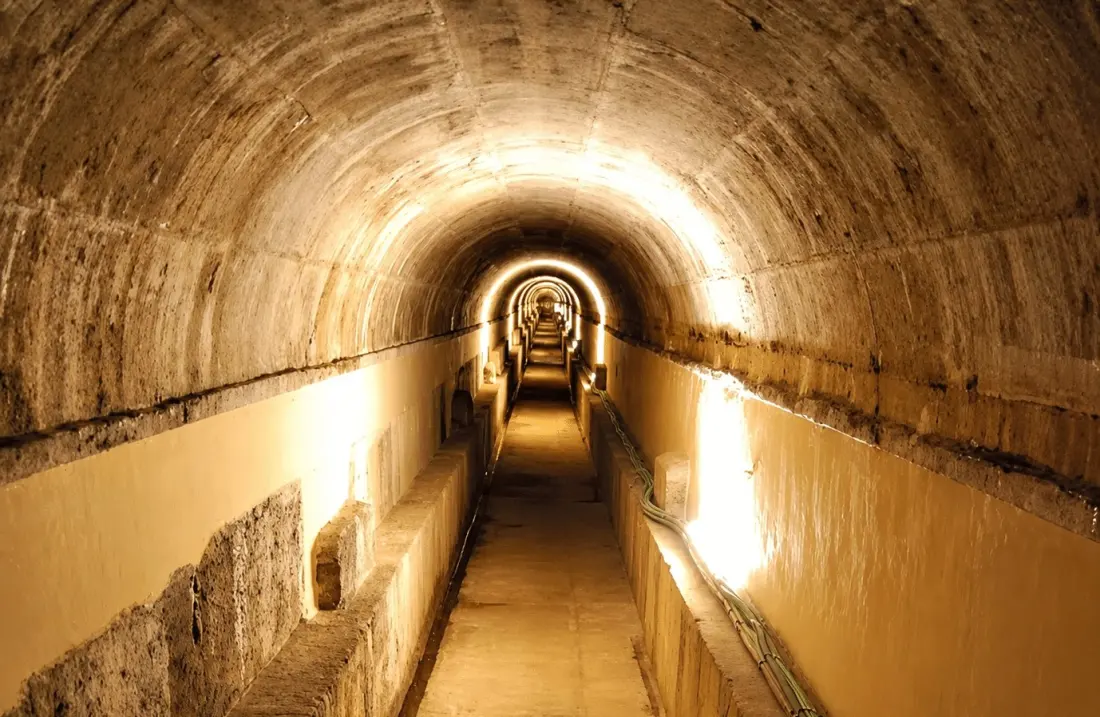
For €6, you can walk beneath the streets of central Lisbon — through an 18th-century water tunnel most locals have never seen. The city's Water Museum is running guided visits of the Galeria do Loreto on Sunday, October 25, with two departures at 2.30pm and 4.30pm.
The gallery belongs to the Águas Livres system, the ambitious water supply network that kept Lisbon hydrated for generations and still lurks largely unseen below the modern city. The route runs under some of the most recognisable streets in the centre, including Rua do Loreto, Rua da Misericórdia, Rua de São Pedro de Alcântara, Rua Dom Pedro V and Rua da Escola Politécnica. As you walk, you'll see the thick stone walls and narrow passages engineered long before modern utilities existed — essentially a subterranean detour through a city you thought you knew.
The walk starts at Casa do Registo on Rua das Amoreiras, 12, and finishes at the Reservatório da Patriarcal in Praça do Príncipe Real. That ending point is a bonus in itself: the Patriarcal reservoir is one of Lisbon's most atmospheric historic structures, a vast cistern with arched brickwork that feels more like a cathedral than plumbing. Emerging into the leafy square in Príncipe Real — full of cafés and independent shops — makes for an easy post-tour plan.
Tickets are bought online, and it's worth acting fast: visits to Lisbon's underground water galleries usually have limited places and tend to sell out. One caveat from the organisers — this isn't for anyone who suffers from claustrophobia. The tunnels are narrow and enclosed, and while the pace is gentle, you're committed once inside.
Why bother? Lisbon's big-name sights get crowded, and October is a sweet spot — warm but not scorching, with thinner crowds than summer. This tour flips the usual sightseeing formula: instead of climbing hills for viewpoints, you go under them and see how a historic capital actually worked. At €6 it's about as cheap as a meaningful city experience gets, and it pairs naturally with the Water Museum's other sites dotted around town.
If you miss the October date, keep an eye on the Water Museum's programme. The Águas Livres system is one of the most significant pieces of historic infrastructure in Lisbon, and the museum opens sections of it throughout the year — the famous Amoreiras aqueduct arches and other reservoirs among them. Underground tours like this tend to be scheduled rather than run daily, so flexibility and early booking are your friends.
Practically speaking: wear closed shoes with decent grip, as tunnel floors can be uneven and slightly damp, and bring a light layer since it's cooler underground. The route is linear, so factor that into your day — you'll finish in Príncipe Real rather than where you started, which is a fine excuse to linger in one of Lisbon's most pleasant neighbourhoods before wandering back downhill toward the centre.