
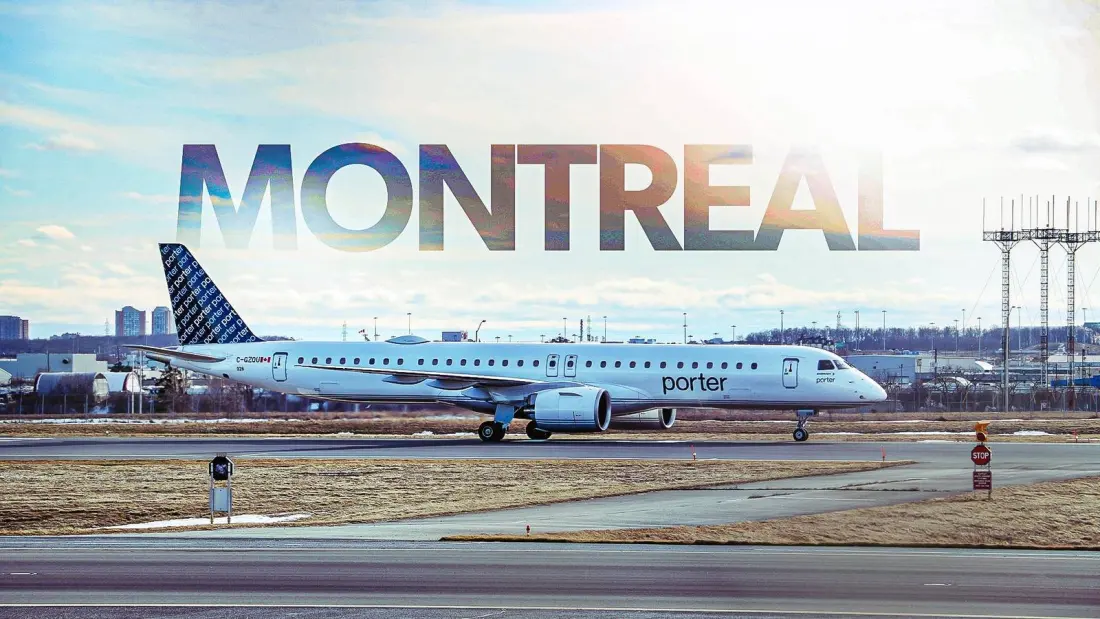
Montreal is trying again at the two-airport game — and this time the plan is built around avoiding one of aviation's most famous flops. On June 15, 2026, Montreal Metropolitan Airport (YHU), formerly Saint-Hubert, opened a new C$450 million (about US$330 million) commercial terminal on the city's South Shore, aiming to handle up to four million passengers a year and take some domestic pressure off Montreal-Trudeau (YUL).
The ghost at the party is Mirabel. Opened in 1975 some 55 km northwest of downtown with sky-high forecasts and one of the largest land reserves ever set aside for aviation, it never attracted the passengers planners promised. Its distance from the city, missing transit links and forced split operations with Dorval drove airlines and travellers back to what is now Trudeau, and Mirabel eventually lost passenger service entirely. The project became a half-century-long cautionary tale about grand visions beating passenger convenience.
YHU takes the opposite bet: build small, close, and around proven demand. The terminal covers 226,000 square feet with nine boarding bridges, a 900-seat lounge and capacity for 15,000 passengers a day at peak — deliberately compact, and just 15 km from downtown. The pitch is speed: operators say travellers can arrive as little as 30 minutes before boarding, with short walks, streamlined security and no international processing to slow things down. Domestic-only operations are the point, not a limitation.
Porter Airlines is the anchor. The fast-growing carrier is launching with 138 weekly flights to 12 Canadian destinations, using Embraer E195-E2 jets (132 seats, transcontinental range) alongside Dash 8-400 turboprops for shorter hops. It's essentially the model Porter proved at Toronto's Billy Bishop city airport: sell time savings, not just seats.
The financing also breaks with the Mirabel playbook. Rather than a government-led megaproject, the terminal was funded through YHU Infrastructure Partners — a venture between Porter Aviation Holdings and Macquarie Asset Management — with a C$90 million loan from the Canada Infrastructure Bank. Around C$30 million went to airfield upgrades. With private capital on the line, the airport has to win actual passengers rather than satisfy a long-range forecast.
For travellers, this matters if you're flying within Canada from Montreal. YHU won't touch Trudeau's international and long-haul role — and isn't meant to. But if a domestic flight from a small, quick terminal on the South Shore beats a trek across the city and a long security line, that's a genuine time saving. Whether Montrealites change their habits is the open question; infrastructure was the easy part.