
Alaska is the kind of trip people save up for, but the true cost of a cruise there is often misunderstood. The headline fare is only the starting point — and sometimes the cheapest part of the whole week.
The good news: entry-level prices are lower than most people expect. Inside cabins on seven-night sailings start at around $600 per person (a May 2027 Princess Cruises "Voyage of the Glaciers" sailing was listed at $599 when The Points Guy checked). Ocean-view rooms add a few hundred dollars, balconies a few hundred more — worth considering in Alaska, where whale sightings and calving glaciers are the whole point. Suites on mainstream lines start in the thousands and climb from there.
Luxury lines like Silversea, Seabourn and Crystal look expensive at $3,000 to $6,000-plus per person, but their fares typically bundle drinks, gratuities, Wi-Fi and curated shore excursions such as glacier hikes and dogsled rides. On mainstream ships, those add-ons stack up fast: shore excursions run $50 to $150 for whale-watching or land tours, while helicopter landings and dog-sledding hit $500 to $900. Drink packages cost $60 to $130 per day, Wi-Fi $20 to $45 per day, and automatic gratuities $17 to $25 per person per day. Add port taxes and government fees of $250 to $400 per person, pre-cruise hotel nights ($150 to $400), flights to the embarkation port ($300 to $800) and travel insurance ($60 to $200), and the gap between budget and luxury narrows considerably.
The bottom-line examples give a realistic picture: a solo traveller in an inside cabin should budget roughly $2,330 for a week including airfare, tips, fees and two excursions; a couple in an ocean-view cabin around $3,760 total; and a family of four in a balcony cabin about $8,320. Compared with a Caribbean sailing at $600 to $1,200 per person, Alaska's roughly $2,300 per person reflects a shorter season, a remote destination and scenery you can't get anywhere else in North America.
One counterintuitive tip: one-way cruises between Vancouver and Seward often look cheaper but can cost more overall. Remote Alaskan airports have limited schedules and high fares, and weather delays can strand travellers for days. Round-trip sailings from Seattle frequently work out better value despite a higher sticker price.
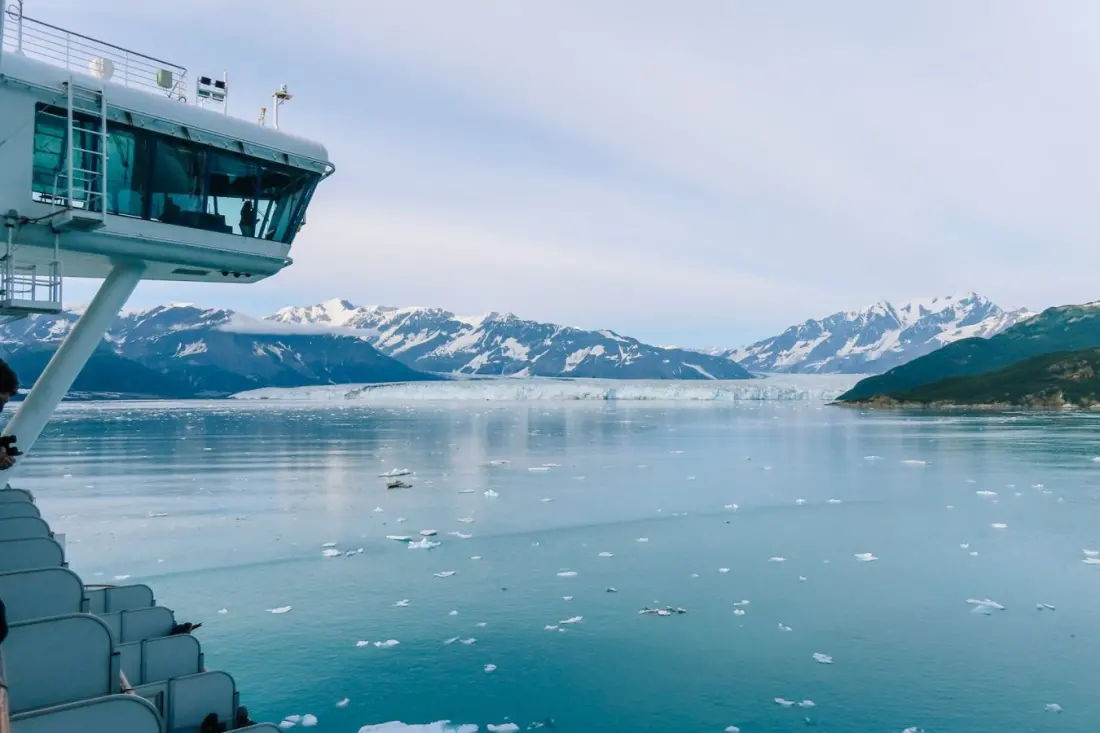
Timing matters too. Shoulder-season sailings in May and September bring lower cabin prices, smaller crowds and often cheaper excursions. And if you're happy without a window, an inside cabin is a smart trade — you'll spend your days on the observation decks anyway, and the savings go further on a glacier helicopter trip than on a room you only sleep in.
For anyone weighing a first Alaska cruise, the takeaway is simple: price the full trip, not the fare. Work out what the extras would cost you on a mainstream line, compare it with an all-inclusive luxury fare, and decide which version of Alaska you're actually buying.