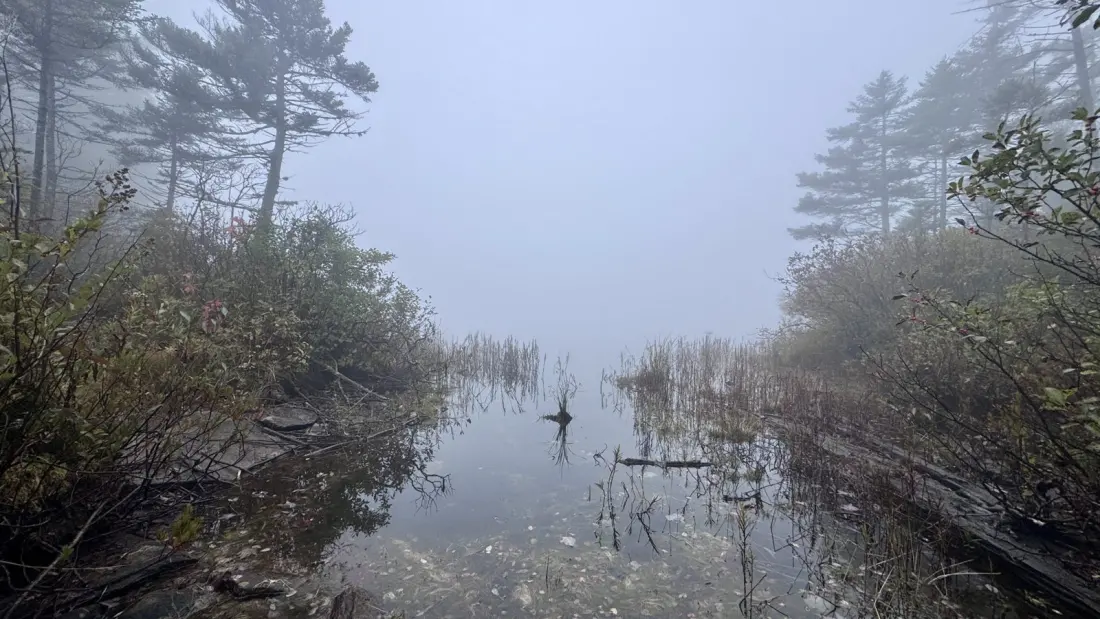
One long day on the Appalachian Trail in southern Vermont packed in just about everything the Green Mountains are famous for: shoe-sucking mud, clouded-in summits, early autumn colour and a very close call with running out of water.
The hiker behind this trail journal set out from VT Route 11/30 near Manchester at around 8:30am with an ambitious 24-mile itinerary to White Rocks Junction — and no easy exit plan if things went wrong. A fellow hiker, trail-named Bonk for his tall frame and forward-facing brim, had just warned him about Vermont's notorious deep mud between the mountains. The good news was the route's modest grade, a gentle 384 feet of climb per mile. The bad news arrived quickly.
Atop Bromley Peak, home to a ski lift and a metal viewing tower, the trail disappeared into cloud. Just below the summit the path was already flooded, with water cascading over rocks and pooling between each step — an odd sight so high up a mountain. The worst of the muck was concentrated in the first few miles past Bromley, after which the ground firmed up. The rest of the day wound through Green Mountain National Forest with streams every few hundred yards, rock hops and footbridges beyond counting, red leaves carpeting the trail under a blanket of mist. Over Griffith Lake, visibility dropped to about 20 feet.
The real drama came late. At 4:44pm, with just 2.1 miles to go, the hiker realised his water was gone and his maps showed no source ahead. Turning back half a mile downhill to Tom Brook would cost an extra mile; camping dry at White Rocks Junction would mean no dinner or evening hydration. He gambled on pushing north — and was rewarded about a mile and a half from the junction by an unmarked spring trickling off the trail, where he collected a litre and a half before walking his final, heavy mile to camp. Total for the day: 24.1 miles and 51,633 steps.
Why should a traveller care? Because this stretch of the AT — which shares its route with Vermont's Long Trail here — is a genuinely achievable adventure for fit day-hikers and section hikers alike, with Manchester as a comfortable base town for resupply and lodging. It's also a good reminder of how Vermont trails behave after rain: even gentle-gradient routes can slow you down, water may be scarce exactly where you plan to camp, and unmarked springs can save your evening. Go prepared, and September's misty, leaf-strewn woods are a remarkable place to be.