
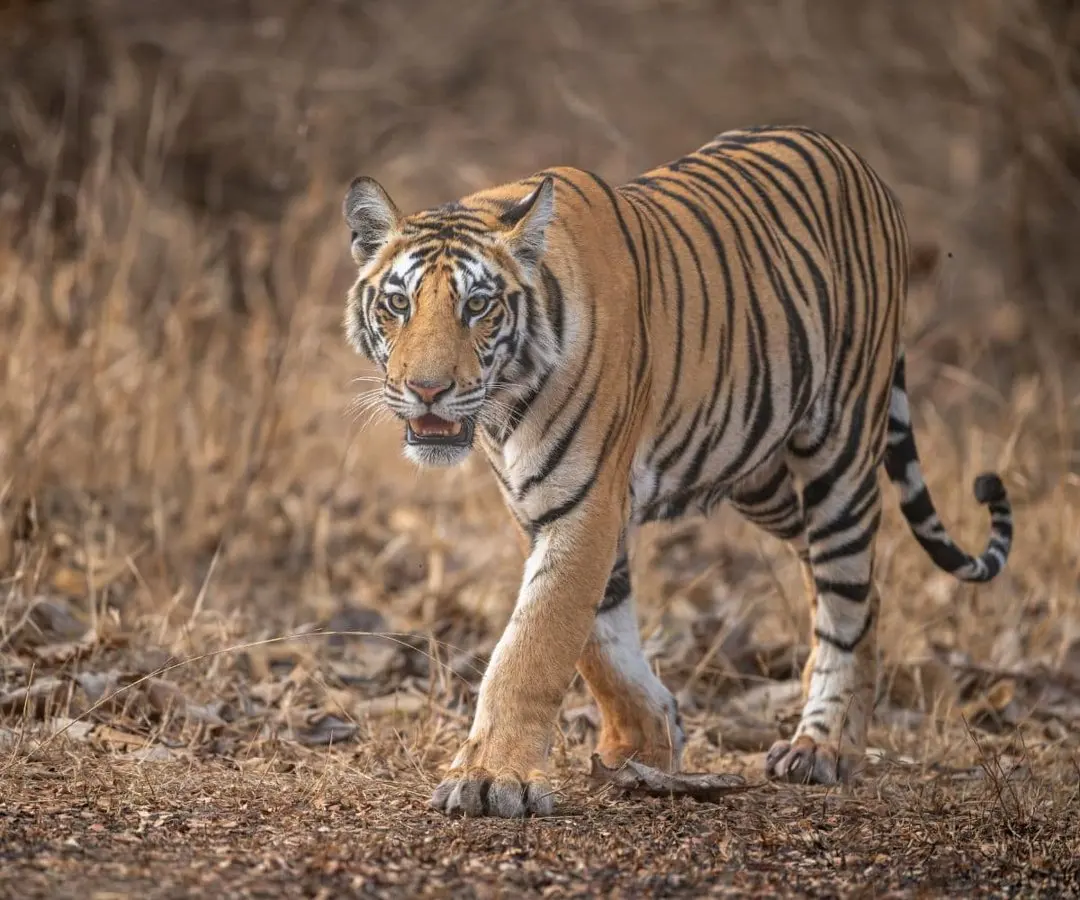
Ranthambore may be India's most famous tiger park, but it's also the one everyone books. For travellers who'd rather share the forest with fewer jeeps, a recent guide highlights seven under-the-radar experiences — walking safaris, leopard country, and a river full of crocodiles.
Satpura in Madhya Pradesh is the top pick, and it's easy to see why: it's one of the very few Indian parks where you can explore on foot, walking the buffer zone with a naturalist and forest guard, reading pugmarks and scat as you go. Tiger sightings are rarer than at Bandhavgarh or Kanha, but the trade-off is a rugged landscape of folded hills and a far more intimate feel for the forest.
Also in Madhya Pradesh, Pench — often linked with Kipling's Jungle Book — rewards those who pick the right entrance. The quiet Jamtara gate, home to Jamtara Wilderness Camp, sits away from the lodge clusters, and the camp arranges memorable nights sleeping out on raised machaan platforms on local farms, with most of the income going to farmers.
Panna is the comeback story: tigers were lost to poaching by 2009, but a carefully managed reintroduction has rebuilt a breeding population. Its scenery is a bonus, with the Ken river cutting through rocky gorges and the Pandav and Raneh waterfalls. The Madla gate is only about half an hour from Khajuraho, which has flights from Delhi, so it pairs neatly with the famous temples.
Sariska is the easy option from Rajasthan — roughly 110km and two and a half hours from Jaipur. Tigers, reintroduced from Ranthambore in 2008 in what's widely described as the world's first scientific tiger reintroduction, now live among the Aravalli hills alongside the hilltop Kankwadi fort and 9th- and 10th-century temples. Utsav Camp, 7km from a gate, is the recommended stay — and leopards occasionally lounge on its bungalows.
Not every alternative is about tigers. The National Chambal Sanctuary protects some 400km of river and was created for the critically endangered gharial; boat trips also turn up Ganges river dolphins, turtles and Indian skimmers. It's 70-85km from Agra — the suggestion is to see the Taj en route, then base yourself in the countryside instead. And in Rajasthan's Pali district, midway between Udaipur and Jodhpur, Jawai offers leopards among granite hills, Rabari herders, crocodiles at Jawai Dam, and a short but steep climb up Kala Pahad for views over it all. Suján Jawai, with ten tents, is the upscale base.
For a genuinely different side of India, Dudhwa in Uttar Pradesh near the Nepal border combines sal forest and grassland, with tigers, reintroduced one-horned rhinos (around eight now roam freely), swamp deer and over 400 bird species including the rare Bengal florican. It's about 240km from Lucknow, which keeps crowds away; the season runs from November, with best sightings December to April, and Jaagir Manor, a restored colonial-era hunting lodge, is the place to stay.
Timing matters: most core zones reopen around 1st October after the monsoon. October and November bring green forest and superb birdlife, though thick vegetation makes tigers harder to spot — March to June is better for sightings if big cats are the priority. And remember that the gate or zone you choose matters as much as the park; permits for Ranthambore and Madhya Pradesh release 120 days ahead and the best zones sell out fast.