
Balancing on a ladder against Singapore's skyline, Jonathan Goh looks like any capable street performer. He is something more unusual: the first Singaporean to earn an honours degree in Circus Arts, having completed a three-year programme at the National Centre for Circus Arts in London in July 2025.
Goh, 30, felt the weight of being a pioneer. A self-described average student, he knew failure would give ammunition to sceptics back home who already questioned his path. "Die die must at least have good results," he told The Straits Times, summing up the pressure of being the first.
The fascination started early. At 11, he watched a fire spinning act and was hooked. He considered formal circus training while still in secondary school, but chose full-time performing instead. Then Covid-19 hit and upended his career, prompting what he calls a leap of faith: enrolling in London despite overseas fees of about £18,000 a year.
The degree sharpened his craft across trapeze, aerial and Chinese pole, teeterboard and juggling. It also came with a punishing student budget. Goh busked at Covent Garden for £200 to £400 a week, took his act to the Edinburgh Festival Fringe over the summers, and flew back to Singapore to perform in the winters.
The gamble appears to be paying off. As co-chairman of Buskers' Association Singapore, he now earns between S$6,000 and S$12,000 a month. The question he fields most often, he says, is whether street performing can actually pay. Once people hear the figures, the scepticism usually fades.
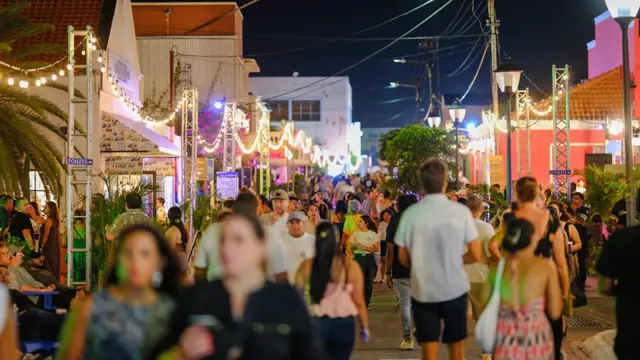
For travellers, Goh's story is a reminder that Singapore's busking scene is more professional than you might expect — its licensed street performers are often trained specialists, not hobbyists with a guitar. Catching a set along Orchard Road, Clarke Quay or the riverside is free entertainment, and Goh's ladder act, honed in one of the world's most demanding circus schools, is a good reason to pause.
His route also sketches a quirky performing-arts circuit for anyone following in his footsteps: London's Covent Garden as a busking proving ground, Edinburgh each August when the Fringe takes over the city, and Singapore as a year-round base where warm weather keeps outdoor shows viable even in northern winter. Few careers offer that geography.
For Singapore audiences, Goh represents a small shift in how performance is valued — a craft that once drew questions about whether it could earn money now comes with a formal degree behind it. The next time you stop to watch someone juggle rings on a city street, it might be worth sticking around for the whole act.