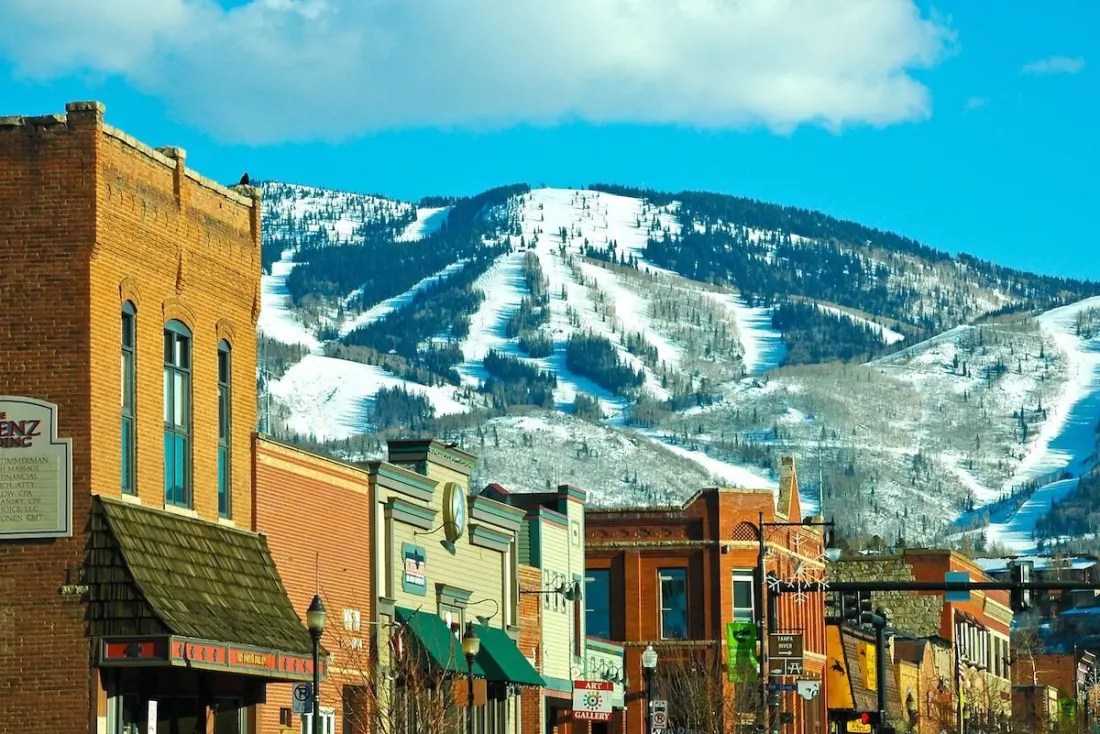
Steamboat Springs has an odd claim to fame: on any given winter day, this small ranching town in north-central Colorado probably has more professional winter athletes per capita than anywhere else in the country. Olympic hopefuls in alpine racing, snowboarding and Nordic combined train here, and locals barely blink. But as one Colorado-born snowboarder who's ridden here for years points out, the town rewards travellers who stick around after the lifts close, too.
That's the pitch of a recent first-person piece from a longtime local: plenty of ski towns offer good snow and a rowdy bar scene and not much else. Steamboat, they argue, runs at another level. It has the energy and year-round engagement of bigger-name resorts like Vail or Breckenridge, minus the Interstate 70 traffic jam that chokes access to the resorts closer to Denver. Steamboat sits further afield, surrounded by working agricultural land, and the Old West ranching culture that shaped it is still very much alive — this is a real town that happens to have a world-class ski hill attached, not a resort that sprang up around a chairlift.
The practical takeaway for anyone plotting a winter trip is that Steamboat works as a proper multi-day destination rather than a pure ski-and-sleep stop. The writer suggests structuring your days so the slopes share time with what's happening in town: the local food scene, cultural offerings, and a favourite old-school Colorado ritual — a long, steamy soak at the town's namesake hot springs after a day on the mountain.
For skiers and riders, the town's athlete pedigree says a lot about the product on the mountain. For everyone else — non-skiers in the group, rest-day planners, or travellers who'd rather split a trip between powder and poutine-free pastimes — Steamboat's mix of ranch-town character and small-city amenities makes it one of the more well-rounded winter bases in the Colorado Rockies. It's also noticeably less hectic than the I-70 corridor resorts, which on a Saturday morning can turn the drive from Denver into its own endurance event. The trade-off is a longer transfer to reach it, which is exactly why the town stays quieter.
The gist: go for the skiing, but plan a day off the hill. Book the hot springs, eat well, wander a town where cowboy hats outnumber tech-bro puffers, and you'll get why the locals — and half the US winter sports pipeline — stick around.