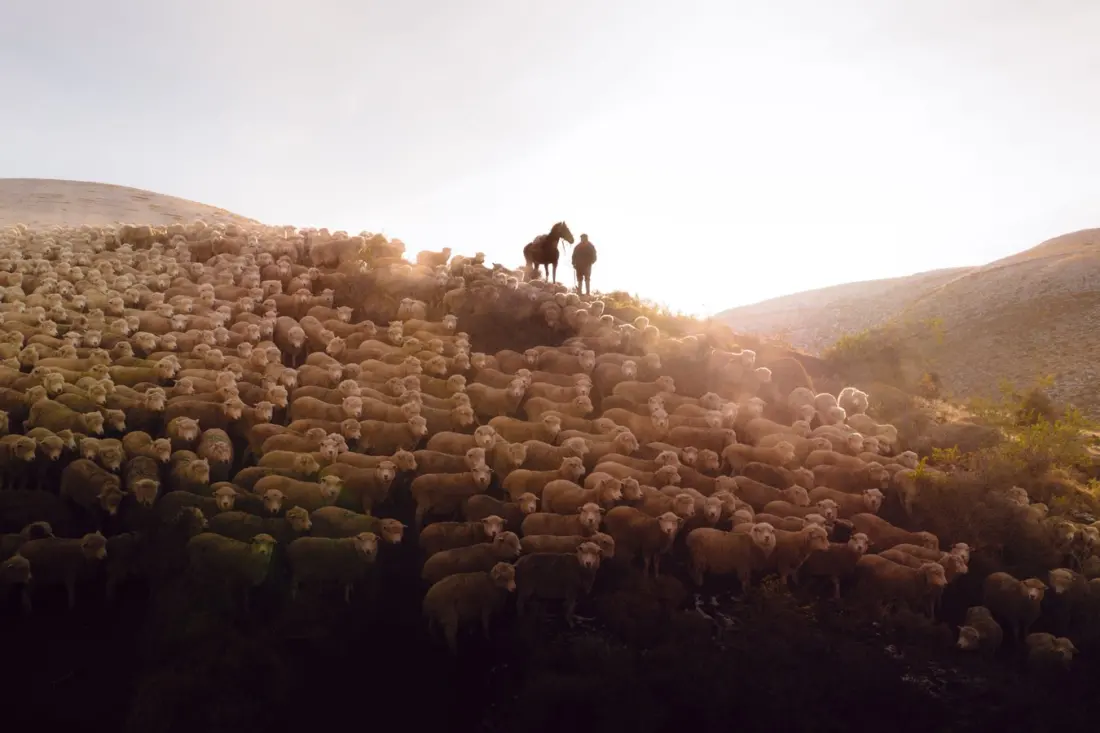
Deep in Chilean Patagonia, in a province whose name translates as "Last Hope", a small group of ageing ranch hands still works the way their grandfathers did — on horseback, alone, for months at a time. Última Esperanza is vast, roughly the size of Croatia, yet home to only around 24,000 people. The puesteros — from "puesto", meaning outpost — are hired to tend livestock on enormous private ranches, living in scattered corrugated-metal cabins often miles from their nearest neighbour. Some go entire seasons without face-to-face conversation.
Amsterdam-based photographer Pie Aerts first noticed these solitary figures during a 2018 trip to Chile. They evaded every attempt at contact, so he tracked down Matías Bolla, the Australian-Chilean director of a documentary about their lives, and the pair returned together in 2022 to photograph and interview them. Six years of work have produced a forthcoming film and a photography book, Coirón — named for a tough endemic grass of the region — published by GOST Books.
The images are as much about Patagonia's severity as its beauty: glacial rivers winding through barren slopes, weather-battered treetops, and tiny outposts dwarfed by the terrain. Aerts also hunted out stranger still lifes — three mattresses under an enormous grey sky, five taxidermied armadillos arranged on a sofa — which he describes as a form of companionship for men with little else.
There's hardship behind the romance. The work pays little, demands long hours, and temperatures in winter regularly fall below freezing. Older puesteros are often let go with minimal notice and forced back to towns where many struggle to settle; one built a shack in his garden simply to sleep outdoors again. Few young Chileans want this life, making the puesteros a fading tradition — and without the polished gaucho mythology marketed elsewhere in South America. One man told Aerts: "What a shame it is to come to love this land that will never be mine."
Yet the photographer pushes back on a purely sad reading. Isolation, he notes, may be involuntary but has taught these men to live comfortably with their own thoughts — a skill, he suggests, much of the modern world has misplaced.
For travellers, the story is a useful corrective. If you're headed to Torres del Paine or the wider Magallanes region, the human landscape around you is as fragile and remarkable as the granite towers. Coirón (GOST Books, out now) makes a strong pre-trip read, and Aerts' work at pieaerts.com offers a glimpse of the Patagonia that exists beyond the viewpoints and trailheads. Credit: Suitcase Magazine.