
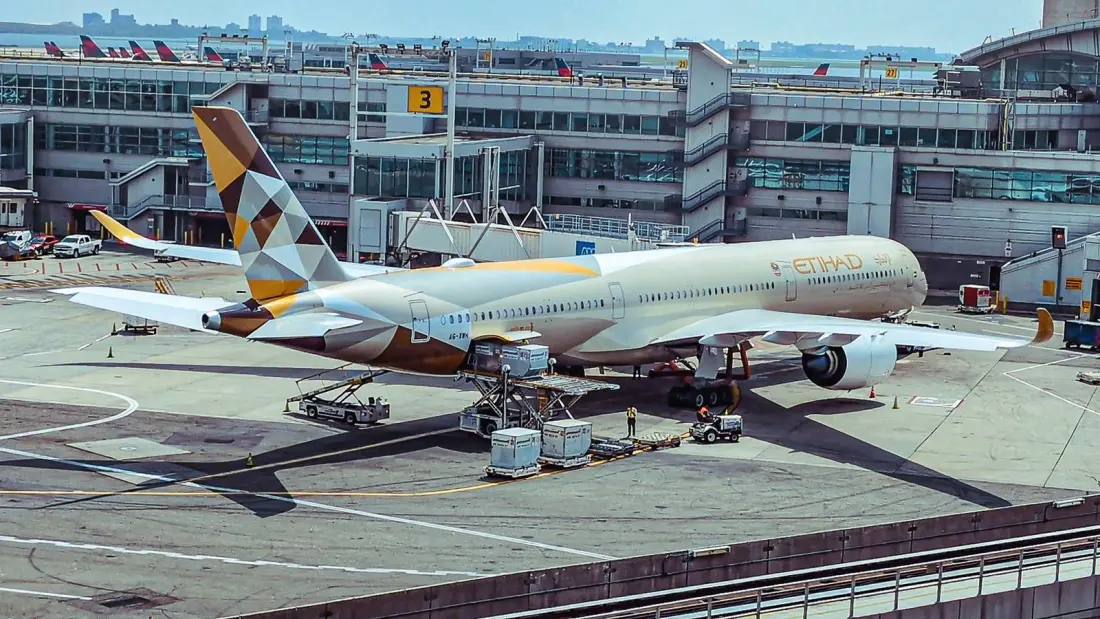
Next time you walk past an unmarked door near the rear galley of an Airbus A350-1000, consider that it might lead to a hidden dormitory above your head. Most long-haul widebodies carry a dedicated crew rest compartment, and on the A350 it is usually a compact space tucked into the crown area of the fuselage, reached by a narrow staircase from the galley. Passengers never see it, which is entirely the point: it keeps resting crew out of sight without sacrificing a single revenue seat at aisle level.
Inside, the space is more sleeper train than business lounge. Bunks line the sides, each fitted with a mattress pad, a reading light, storage for personal items and — crucially — a seatbelt so crew can sleep safely through turbulence. Privacy curtains divide the bunks, and the whole compartment is kept dark and quiet. There is no luxury here by design: the goal is sleep density, not lounging, so crew return to the cabin alert enough for service and, more importantly, for emergencies.
The whole system depends on extra staffing. Long-haul flights carry more flight attendants than the legal minimum, letting the team rotate between working and resting groups on a scheduled basis. Break windows are planned in advance so everyone gets enough time to actually sleep on a 15-hour sector, rather than napping opportunistically when the cabin is quiet.
These compartments are regulated, too. FAA guidance for augmented-crew sleeping quarters expects bunks of roughly 78 by 30 inches, with temperature and airflow control, privacy dividers, emergency lighting and a way for cabin announcements to reach sleeping crew quickly. And because every square metre spent on crew rest competes with seats, cargo or galley space, layouts vary by airline — some fit bunks above the cabin, others below the main deck. Airbus has even shifted rest staircases in newer A350 cabin standards as carriers chase more premium galley space. Not every airline builds dedicated bunks at all: United's older Boeing 767s, for instance, set aside four recliner seats at the back as crew rest.
For travellers, this is a small piece of behind-the-scenes engineering that directly shapes your flight. Fatigue management is treated as a safety issue, not a perk — the hidden bunks are why the crew serving your 14th hour in the air are still sharp. It is also a fun bit of aircraft trivia the next time you board an A350-1000 on routes like London to Singapore or Doha to Sydney: somewhere above you, a colleague is buckled into a bunk you will never see.
Story credit: Simple Flying.