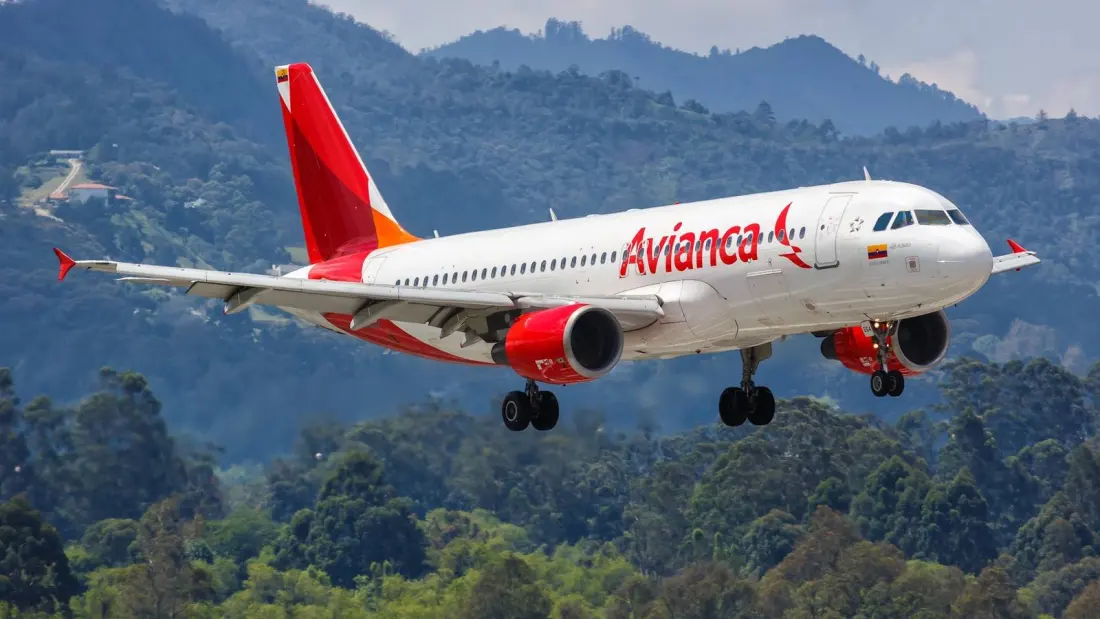
An overnight Avianca flight from Medellin to New York ended up in Miami on Friday after hitting severe turbulence that injured nine people on board.
Flight 42 had left Jose Maria Cordova International Airport bound for JFK. About two hours into the trip, while cruising at 34,000 feet just south of Jamaica, the aircraft appears to have run into rough air — tracking data from FlightRadar24 shows it climbed to 36,000 feet before beginning a descent to Miami about an hour later. The Airbus A320-200 touched down safely at Miami International at 3:24 AM.
The human cost was significant. Avianca told CBS Miami that six passengers and three crew members were treated for injuries, and Miami-Dade Fire Rescue said eight people were taken to hospital. Seven had been released from Jackson Memorial Hospital by Friday evening, but one person was reported to have severe trauma. The flight later resumed its trip, departing Miami at 8:35 AM and reaching New York by 10:50 AM. The airline said it was staying in contact with those affected and that safety remains the foundation of its operations.
There's a legal angle worth knowing as a passenger. Because this was an international flight from Colombia to the US, the Montreal Convention applies. Aviation attorney Pablo Rojas told CBS News it obliges Avianca to cover injured passengers' medical care up to 100,000 Special Drawing Rights — a unit based on a basket of major currencies including the dollar, euro and pound. The convention also protects you in more mundane situations: airlines are strictly liable for delayed checked bags up to about 1,519 SDR (roughly $2,175), covering costs while you wait, though claims need to be filed within 21 days.
The practical lesson is the one flight attendants repeat constantly: keep your seatbelt fastened whenever you're seated. Weather radar and pilot reports can hint at bumpy air, but turbulence often arrives with no warning at all. When a plane drops suddenly, anyone unbuckled can be thrown into the ceiling — head and neck injuries are the most common, along with ankle, leg and spine fractures. Video from the Avianca flight showed passengers icing their heads, a clear sign of exactly that kind of impact. The FAA estimates around 58 people a year are injured by turbulence on US commercial flights, and crew members are especially exposed because they spend so much time on their feet.
For holidaymakers, the takeaway isn't to worry about flying — severe turbulence injuries remain rare — but to treat that seatbelt sign as a genuine safety instruction rather than a suggestion. Buckle up even on calm-looking flights, particularly over regions like the Caribbean where convective weather can build quickly. And if the worst does happen on an international flight, remember you have defined rights to compensation under the Montreal Convention.