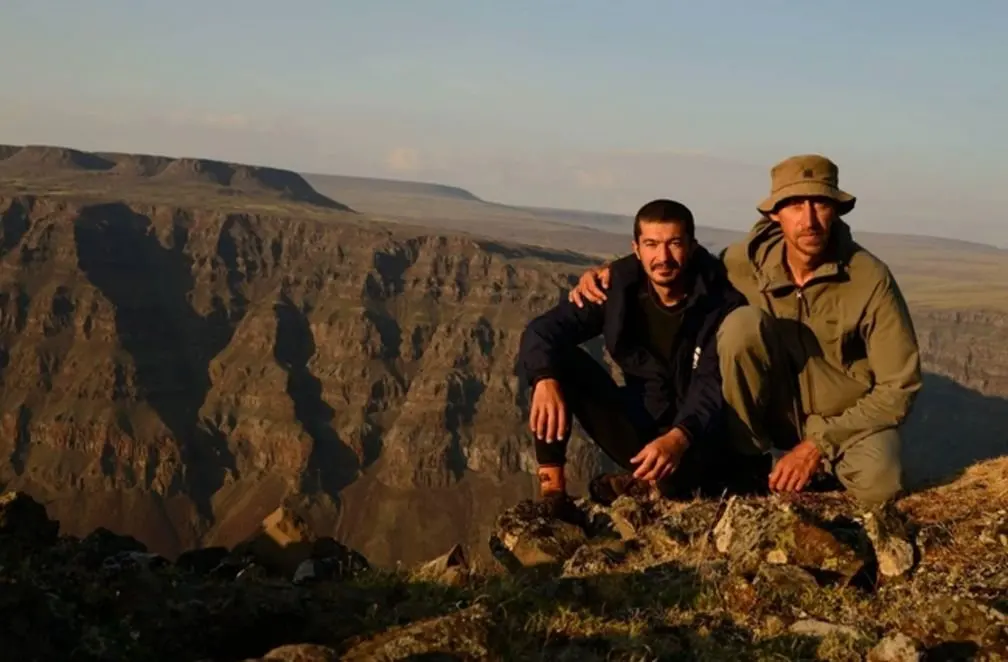
A 700km expedition across one of Siberia's most inaccessible wild areas ended in smoke, bear trouble and a lot of walking. Russian explorers Danil Barashkov and Sergey Malykh spent roughly 60 days crossing the Putorana Plateau, a mountainous Arctic plateau between 67°N and 70°N that's about the size of Great Britain. They started in early July, flying to the small town of Svetlogorsk and travelling by motorboat up the Kureika River system to Lake Dupkun, before setting off on foot on July 7 with 40kg packs.
The plan hinged on packrafts — light inflatable boats that let you paddle river sections between hikes. But Siberia had other ideas. Almost no rain fell in June, so the plateau's legendary water was missing. The region holds some 25,000 lakes and is Russia's second-largest freshwater reserve after Lake Baikal, yet water levels were too low to paddle and even drinking water ran short. Malykh described arriving with rafts and finding dry riverbeds, like standing on pavement wearing skis. The mosquitoes, meanwhile, showed up in force — he recalled lifting a pot lid to find a layer of them floating on top.
The drought forced a rethink. Instead of pushing through to the remote settlement of Khatanga as planned, they crossed 300km on foot toward the upper Kotuy River basin, sometimes shuttling gear in stages and averaging just 15km a day. From the Kotuy, the water finally cooperated: over three weeks they packrafted 400km downstream, foraging berries and catching fish to stretch their food.
Bears were a running theme. They nearly stumbled into a sleeping one, and another ignored shouts and a flare gun before backing off at 15 metres from camp. The tensest moment came when they returned to a food cache to find a bear still eating their supplies. With hundreds of kilometres still ahead and no resupply options, they scared it off briefly, grabbed what was left, and fled downwind.
They reached the village of Chirinda in the second half of August, wrapping up the expedition at around 60 days. Even then, wildfires sweeping the tundra forests grounded flights and pinned them in the village for another 10 days under heavy smoke.
Why care? The Putorana Plateau is one of the planet's genuinely empty corners — no roads, no settlements for most of the route, and a permits-and-logistics challenge that keeps ordinary travellers out. This trip is a useful window into what the far north is becoming: drier summers, spreading wildfires, and low rivers that can upend even expert plans. For most of us it's armchair reading rather than a holiday itinerary, but if Siberian adventure travel is on your radar, the story doubles as a warning about how much redundancy — food, exit plans, fire season buffers — a trip there now demands.
Story via ExplorersWeb.