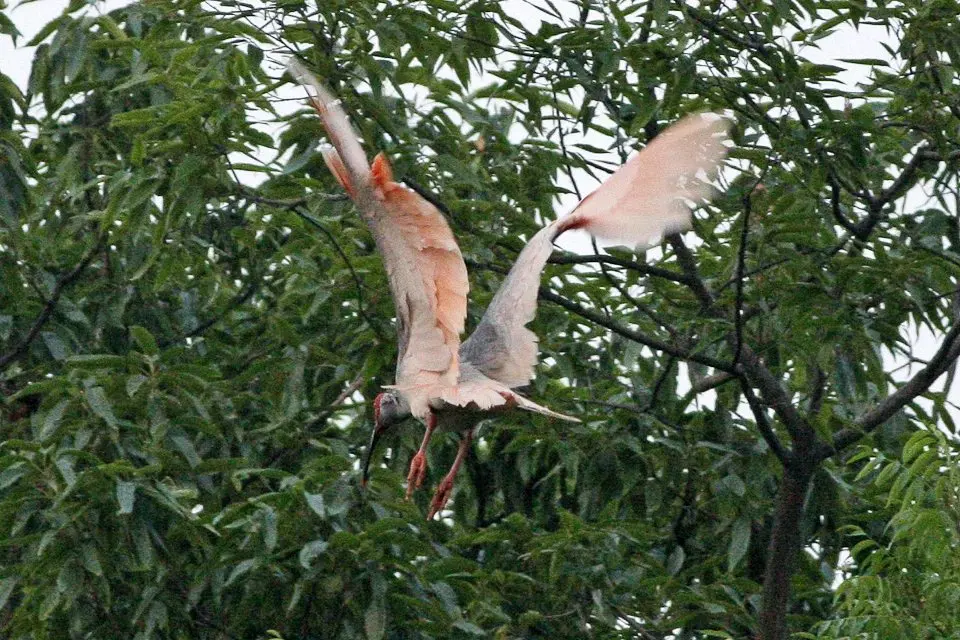
One of Japan's most poignant conservation stories has a new chapter. Nine crested ibises — large, striking birds with pink-tinged wings and a curved bill — were released into the wild in Nakanoto, Ishikawa Prefecture, on Japan's main island of Honshu. It's only the second mainland release of the species, following 18 birds set free in nearby Hakui earlier this year.
The crested ibis once vanished entirely from Japan's skies. Decades of overhunting and pesticide-driven habitat decline wiped out the native population, and the last Japanese-born bird died in 2003. Recovery only became possible thanks to a pair of birds gifted by China, whose captive-bred descendants formed the basis of a reintroduction programme on Sado Island in Niigata Prefecture starting in 2008. That island population has since climbed to roughly 500 wild birds — proof the programme works, and the reason conservationists are now expanding beyond it.
The nine birds released in Nakanoto ranged in age from one to 13 and were bred at facilities in Tokyo, Niigata and Shimane prefectures. When the door of their temporary enclosure opened at about 11.30am, all nine had flown free within an hour and a half. The release was coordinated by Japan's Environment Ministry with the Ishikawa prefectural government and local municipalities, and the mayor of Nakanoto framed it as a community project: building a place where the birds, local people and farming livelihoods coexist.
There's more to come. Another release is planned for Izumo in Shimane Prefecture in 2027, gradually restoring the ibis to more of its historical range.
For travellers, this is a rare chance to watch a species claw its way back from extinction. Sado Island remains the place to see crested ibises in the wild — the birds forage over rice paddies, and the island runs a crested ibis preservation centre where visitors can learn the full story. The new Ishikawa population could eventually give birders a mainland alternative, though the released birds will need time to settle and breed.
Wildlife-minded visitors to Japan should keep an eye on Ishikawa's Noto Peninsula. Beyond the ibises, the area offers coastal scenery, traditional crafts and rural landscapes largely untouched by mass tourism — and spotting one of these birds overhead would be a genuine badge of honour.