Looking back at the pandemic from Cuenca, one expat writer has offered a reminder of just how local the Covid experience really was — and how much of the official guidance made sense mainly as administrative convenience rather than science.
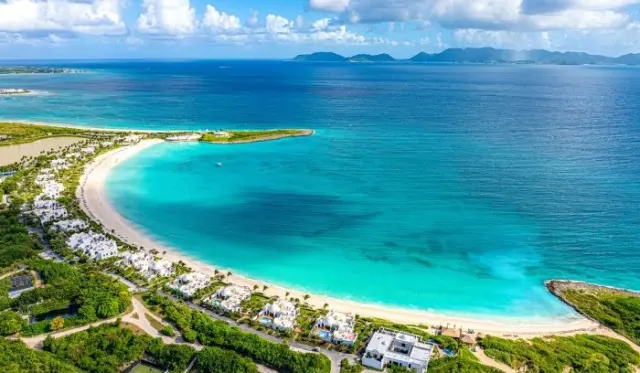
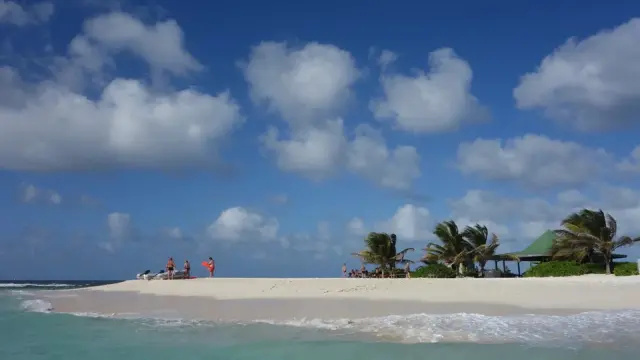
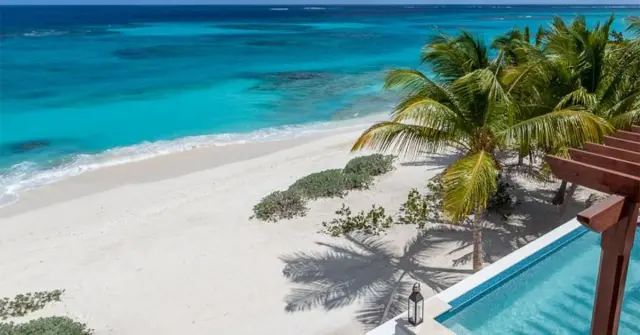
His starting point is a small absurdity: Americans were told to stand six feet apart, while Britons, Ecuadorians and much of the world were told two metres — about six feet seven inches. Nobody ever explained the missing seven inches, because there was nothing to explain. Risk didn't switch off at a magic number; it faded gradually with distance, ventilation, crowd size, duration and what people were doing. Uncrowded beaches, it turned out, were among the safest places to be, while packed bars were the danger zones. But "check airflow and crowd density" doesn't fit on a shop floor sticker, so the round numbers became law.
In Ecuador, the vaccination story unfolded very differently from the United States. The author received Sinovac, the Chinese inactivated-virus vaccine that the WHO approved for emergency use and that was administered widely across Latin America and Asia. It was less effective than Pfizer or Moderna at preventing symptomatic infection but offered solid protection against serious illness and death. Oddly, the US never offered Sinovac to Americans hesitant about mRNA technology — yet it recognised Sinovac certificates for travellers entering the country. An American could fly home from Ecuador fully vaccinated with a shot his Florida neighbour couldn't request.
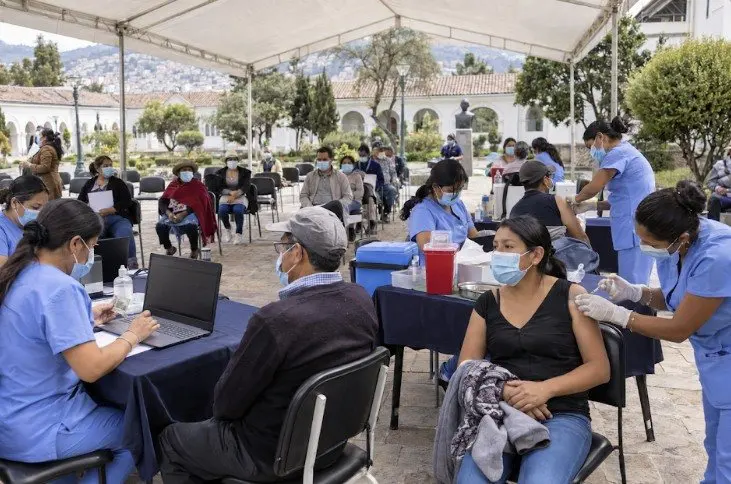
The Ecuadorian campaign itself was strikingly free of politics. Vaccines — Sinovac, Pfizer, AstraZeneca and others — were administered free to everyone, including tourists and expats, at outdoor tent sites on university campuses. People showed their cédulas or passports, rolled up a sleeve, and got whatever was available. Vaccination was a bureaucratic errand, not a tribal statement. The country's memories of the pandemic were darker earlier on: the Guayaquil outbreak overwhelmed hospitals and morgues so badly that families sometimes kept bodies at home or wrapped in sheets outside in the tropical heat.
There are practical details travellers will recognise. Entry to the US required a test within 72 hours — easily $200 per person stateside, with no guarantee of results in time. In Ecuador, a rapid test and a typed negative-result letter cost about $10, ready in ten minutes. Malls demanded neck-worn vaccination certificates; footprints marked where to queue. And Fort Lauderdale airport, remarkably, had no on-site testing facility when the author's daughters flew in — a problem he solved with loud Spanish and a stamped health document at the gate.
His broader point applies beyond Ecuador: in much of the world the obstacle to vaccination wasn't hesitancy but supply — cold chains, clinics fifty miles away, parents unable to lose a day's wages. The virus was global, but the meaning of vaccination, like the rules for travelling through it, was stubbornly local.