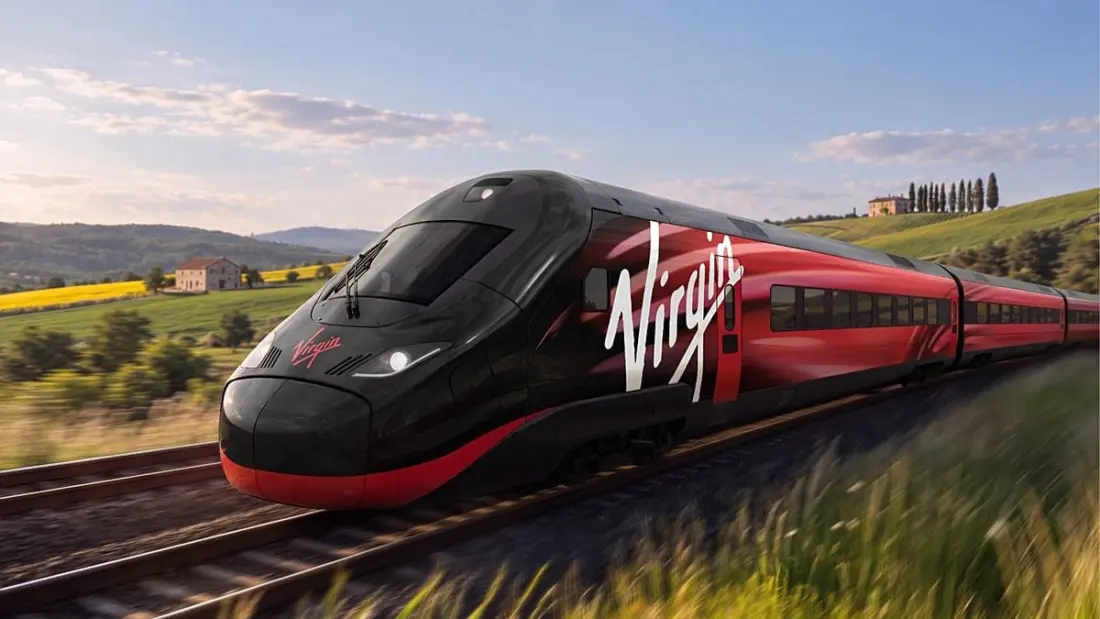
Virgin has shown off the first images of the trains it hopes will challenge Eurostar on cross-Channel routes from 2030, and the designs are unmistakably Virgin: glossy black bodies with bold red accents and interiors built specifically for journeys between London and the Continent.
The plan is ambitious. Virgin wants 20 return services a day linking London with Paris, Brussels and Amsterdam, which would add close to 7.5 million seats a year to the market. To run them, the company has ordered 12 high-speed trains from French manufacturer Alstom, each capable of reaching 300km/h. A signed agreement published by the UK's Office of Rail and Road also shows Virgin and Eurostar have worked out maintenance arrangements, with the new fleet serviced at the Temple Mills International depot in London — a practical hurdle cleared, and a sign the challenge to Eurostar's long monopoly is moving from ambition to logistics.
What about the on-board experience? Virgin is pulling design cues from across its empire. Pre-departure lounges and social spaces on the trains will take inspiration from Virgin Atlantic's Clubhouses, widely considered some of the best airport lounges around. Food and drink will lean on the know-how of Virgin Voyages, the group's adults-only cruise line, while seating and communal areas will draw on Virgin Hotels. Accessibility is flagged as a priority across the fleet.
Frequent flyers get something too: journeys will earn points through Virgin Red, the group's loyalty platform, which can be spent across Virgin brands — so a train ticket to Paris could feed into flights, hotel stays or cruise perks.
Why does this matter to travellers? Right now Eurostar essentially has the cross-Channel rail market to itself, and fares reflect that. Twenty daily return services from a second operator should mean more choice, more capacity and, hopefully, more competitive prices on some of Europe's busiest rail corridors. Virgin's pitch, in the words of group CEO Josh Bayliss, is to make the journey something to look forward to rather than just a means of getting there.
The caveat is timing: services are targeted for 2030, so for now this is a promise and a rendering rather than a booking. Still, for anyone who regularly takes the train between London and the Continent, competition on the route is genuinely good news — and if the on-board experience lives up to the Clubhouse inspiration, the trip itself might become part of the holiday.