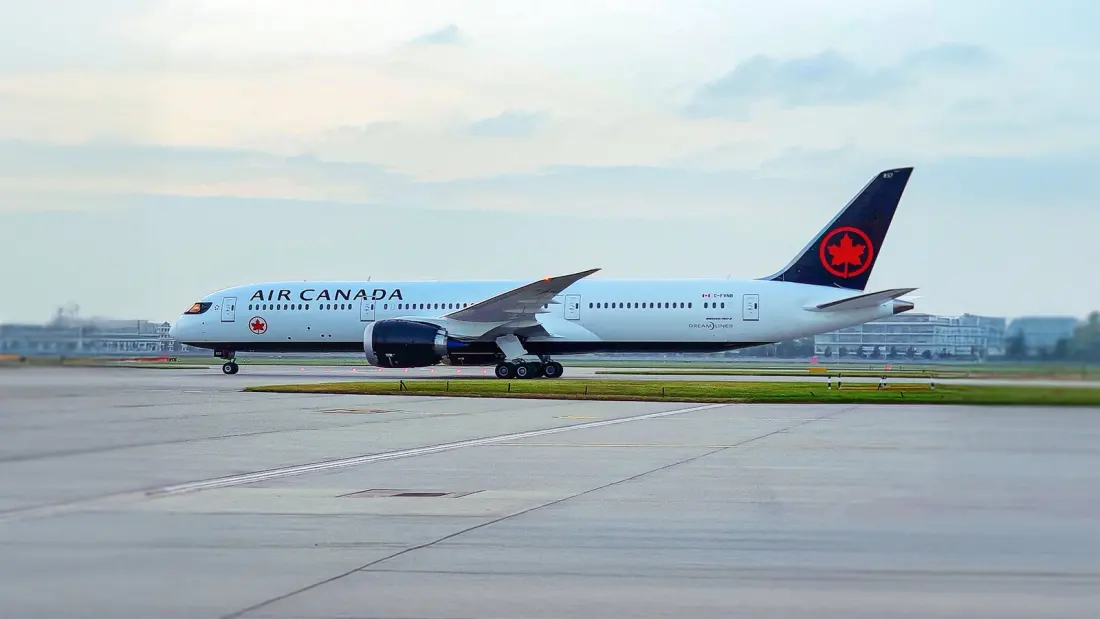
Air Canada's longest flight is about to disappear. The non-stop service from Vancouver to Singapore — 7,967 miles and up to 16 hours 45 minutes in the air — will operate for the last time on January 26, 2027, less than three years after it launched on April 3, 2024. For travellers, it's another reminder that ultra-long-haul routes live or die on economics, not romance.
The route was born into a gap in the market. Singapore Airlines had pulled its own Changi–Vancouver non-stop in October 2023, leaving Canada with no direct link to Southeast Asia's financial hub. Air Canada stepped in four times a week with a Boeing 787-9, its first Singapore service in over three decades, hoping to funnel corporate traffic and connecting passengers from across Canada and the US through its Vancouver hub.
It didn't add up. The 787-9, fitted with just 30 business class pods, 21 premium economy seats and 247 economy seats, needed steady corporate demand at high fares to work — and it didn't come. Fuel burns compound brutally on flights this long, headwinds and diversion reserves pushed the aircraft near its weight limits, and belly cargo space that usually cushions slow seasons went unsold. Load factors slid to around 60% in off-peak months, and soft premium yields sealed the route's fate. Air Canada is cutting or pausing 13 international routes in total as it protects margins.
The telling contrast is Bangkok. Air Canada's Vancouver–Bangkok service, launched as a seasonal trial on the very same aircraft type, now runs year-round because leisure and visiting-friends-and-relatives traffic keeps the economy and premium economy cabins full. Singapore, pitched at corporate wallets, couldn't match that. The lesson: cabin design and passenger mix matter more than route prestige.
For anyone booked on the route, or hoping to fly Canada–Singapore non-stop, the workaround will be Star Alliance partners. Air Canada plans expanded codeshares with Singapore Airlines via hubs in Tokyo, Seoul and Osaka, while redeploying its 787s to markets with stronger demand — including new seasonal service to Sapporo and non-stop flights to Guangzhou. A proper return to Singapore may wait for the eight Airbus A350-1000s Air Canada has on order from 2030, an aircraft with the range, payload and cabin space to carry full cargo holds and a denser premium cabin on 16-hour sectors.
Why care? If you're planning a Canada–Asia trip, non-stop options are shifting fast: Bangkok stays, Singapore goes, and connections through Northeast Asian hubs will be the norm for years. And for route nerds, this is a clean case study in why only the biggest carriers can sustain flights beyond roughly 7,500 miles — the economics punish anyone without deep pockets, dense premium cabins and a mega-hub to feed them.
Simple Flying