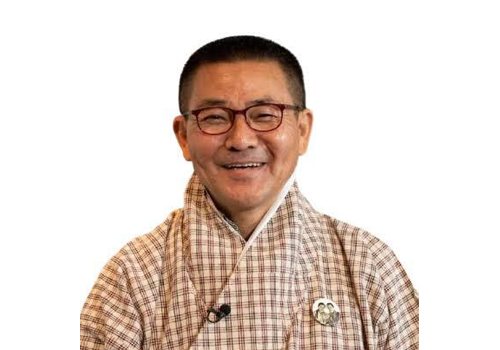
Bhutan is having a jobs conversation, and one of its most prominent voices thinks the country is asking the wrong question. Dorji Dhradhul, author and former tourism chief, argues in The Bhutanese that the real issue isn't whether Bhutan has enough jobs - it's whether its people are being prepared for work that doesn't exist yet.
The numbers behind the worry are stark. The World Bank notes that Bhutan's solid economic growth hasn't produced enough well-paid jobs, especially for young people. Over 40% of workers remain in low-productivity agriculture, and quality positions are still concentrated in the public sector. Meanwhile, more than 71,000 Bhutanese now work abroad - overseas migration was flagged as a major national concern in the 2026 State of the Nation report.
The government isn't standing still. Its 21st Century Economic Roadmap points to digital businesses, AI-ready data centres, knowledge services, wellness, education, green tech and tourism as the sectors that could diversify the economy. A National AI Strategy is in place, framed around human well-being, culture and environment rather than technology for its own sake. And Gelephu Mindfulness City - the ambitious new urban project pitched around technology, finance, spirituality and sustainable development - recently drew nearly 750 applicants in a single recruitment drive.
But Dhradhul's core argument is about mindset, not infrastructure. If machines can increasingly write, calculate, translate and analyse, the premium will shift to what they can't easily replace: curiosity, empathy, judgement, ethical reasoning and imagination. His word for it is creativity - not painting or poetry, but the capacity to connect ideas and solve problems in new ways. He wants Bhutanese youth to see themselves not just as job seekers but as opportunity creators, and he'd like schools to reward good questions as much as right answers. Early steps exist, from the 21st National Education Conference to the Youth Tech-Novation initiative training hundreds of young people in digital skills.
Why should travellers care? Because Bhutan has never chased mass tourism or a high-volume economy, and this piece doubles down on that identity. The country's bet is that its competitive edge lies in culture, nature, a small population and human potential rather than scale. For visitors, that philosophy is the product: the wellness retreats, the low-impact tourism, the mindful city taking shape in Gelephu. If Bhutan gets this right, the places you visit in a decade will be shaped by a generation trained to create rather than comply. The author's closing thought is a striking one - that Bhutan's most valuable infrastructure isn't a road or a data centre, but an imagination bold enough to rethink the country entirely.
For anyone watching Bhutan beyond the monastery trails - investors, educators, or travellers curious about one of the world's most deliberate experiments in national development - this is a useful window into where the country thinks it's going.
The Bhutanese