Skip the big names and Burgundy gets even better. One writer stitched together the region's official gourmet trails — short, self-guided routes of under 110km each, linking clusters of small towns — into a multi-day loop through backroads, avoiding Dijon, Beaune and Auxerre in favour of rustic produce over Michelin dining.
The trip starts fizzing at Veuve Ambal in Montagny-lès-Beaune, Burgundy's largest crémant producer. Its l'Atelier de la Bulle visitor centre offers a self-guided audio tour above a working factory where robotic arms wash, fill and label around a million bottles, before a tutored tasting drawn from the house's 17 crémant styles. Next stop, Nuits-Saint-Georges and Le Cassissium, attached to liqueur maker Védrenne. Burgundy is France's second-biggest blackcurrant-growing region, and the tour ends with cocktails and a platter of gougères, goat's cheese and jambon persillé — plus the discovery that a Kir Royale is trademarked, so order a crémant-and-cassis spritz instead.
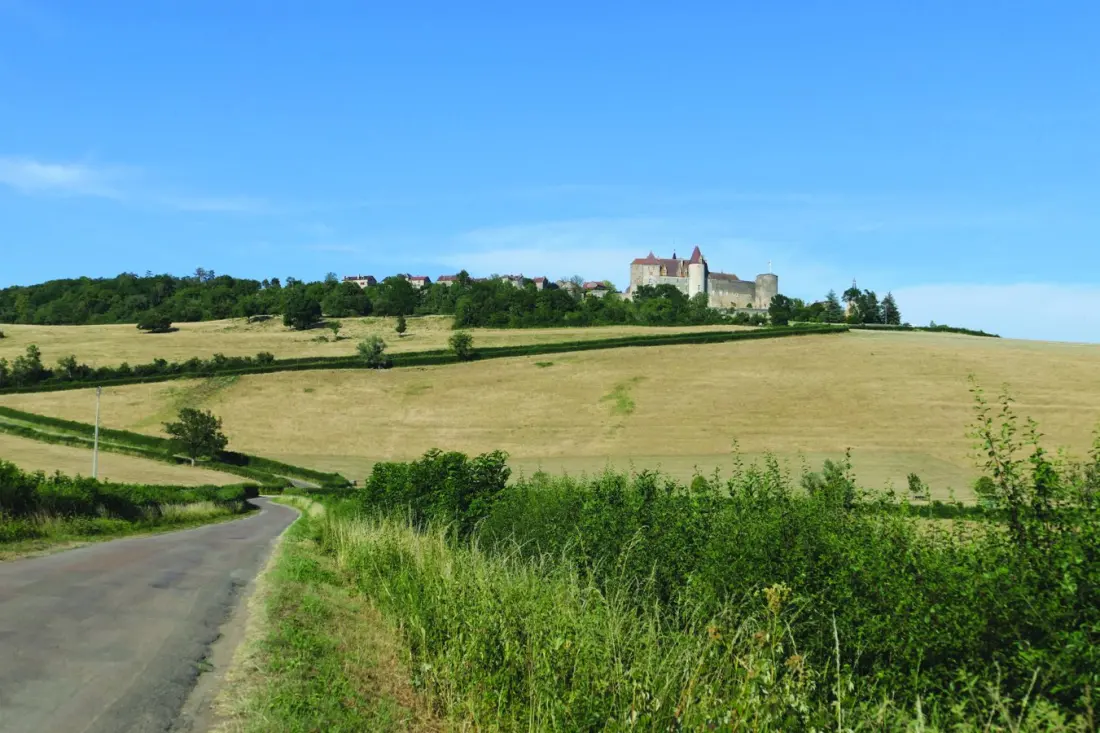
West of the vineyards, the Auxois countryside delivers medieval hilltop villages. Flavigny-sur-Ozerain, one of France's Plus Beaux Villages and a filming location for Chocolat, has a patisserie selling Le Granit Rose, a pink praline sponge. Nearby Époisses is home to Fromagerie Berthaut, which has washed its famous cheese in Marc de Bourgogne for 70 years — with the brine-washed Soumaintrain as a lesser-known alternative. The village's former abbey now houses the Anis de Flavigny sweet factory, where monks began making aniseed dragées in Charlemagne's era; free tours, a small museum and tastings are on offer.
Further north, Chablis brings wine bars along the River Serein and the 19th-century Maison de l'Andouillette shop, stuffed with local sausages, mustards and dunking-friendly biscuits de Chablis. Pontigny's vast abbey offers cool respite on a hot day and a long lunch at its barn restaurant. The trip closes underground at Bailly Lapierre, where former limestone quarries — the stone built Sacré-Cœur and Chartres Cathedral — now form kilometres of tunnels holding the co-operative's wines at a constant 12°C. Tastings happen 50 metres below ground, ideal during a heatwave.
The route also threads through the Morvan's forested hills, riverside villages like Mailly-le-Château, and the Route des Grands Crus, linking Pommard, Meursault, Puligny-Montrachet and other cream-limestone wine villages.
This is a trip for travellers who like their wine regions at walking pace: self-drive, snack-led and heavy on villages you can park in easily. A car is essential, and the short gourmet-trail format means you can cherry-pick two or three days rather than commit to a full circuit. Pair the driving with winery tours that welcome visitors without bookings, and save the Grand Cru tasting rooms for another trip.