
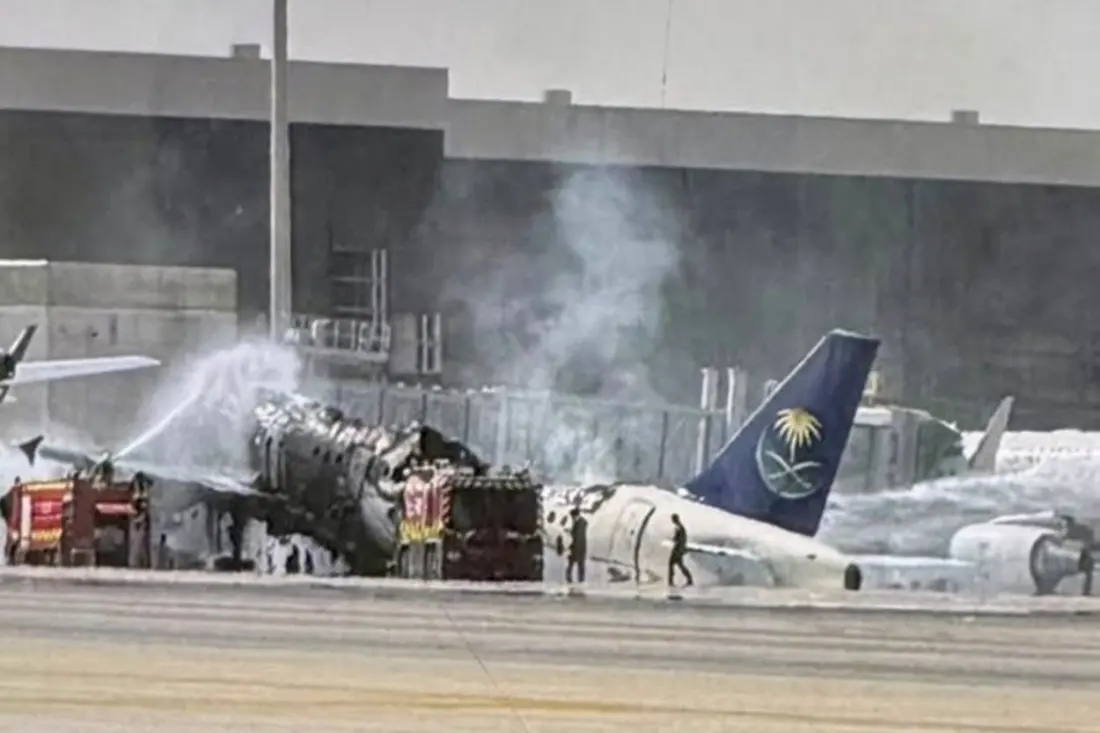
A parked Saudia Airbus A320 was destroyed and three people were killed — among them Saudia captain Hamoud Ali Alkalthami — after attacks on Riyadh's King Khalid International Airport (RUH) on 8 October. Yemen's Iran-backed Houthi rebels claimed responsibility, saying the strikes were retaliation for Saudi support of Yemeni government forces.
Saudi authorities said the attacks hit facilities at the airport as well as the aircraft, killing three Saudi citizens and injuring several people of other nationalities. Photos of the A320 show a burned-out fuselage with only remnants of the wings and tail. The jet was parked at a gate with no passengers aboard, and it remains unclear whether it took a direct hit or was struck by debris from an interception — or whether the captain was on the aircraft when he was killed.
The immediate fallout for travellers was severe. Hundreds of flights were cancelled the following Thursday. Lufthansa Group suspended Riyadh service through 16 October, while Air India and Akasa Air cancelled through 10 October and IndiGo through 9 October. Emirates and Etihad dropped their Riyadh flights on 9 and 10 October. Air traffic has since resumed, but a quick return to normal schedules looks unlikely, and several carriers may keep their distance while the security picture is uncertain.
The writer of the source piece also speculates that Delta may use the attack as cover to shelve its planned Riyadh route, which was already considered questionable despite Saudi subsidies — a signal that US carriers in particular are unlikely to commit to the market anytime soon.
The bigger picture is grim: the renewed fighting in Yemen is widely seen as spillover from the wider Iran conflict, and civilian aviation keeps getting caught in the middle. An empty aircraft can be replaced; three people going about an ordinary workday cannot. For anyone with Saudi travel plans, the takeaway is practical as much as political: monitor your airline's advisories closely, expect rolling suspensions rather than blanket shutdowns, and build flexibility into any booking to Riyadh or through Gulf hubs in the coming weeks.
Story reported by Live and Let's Fly.