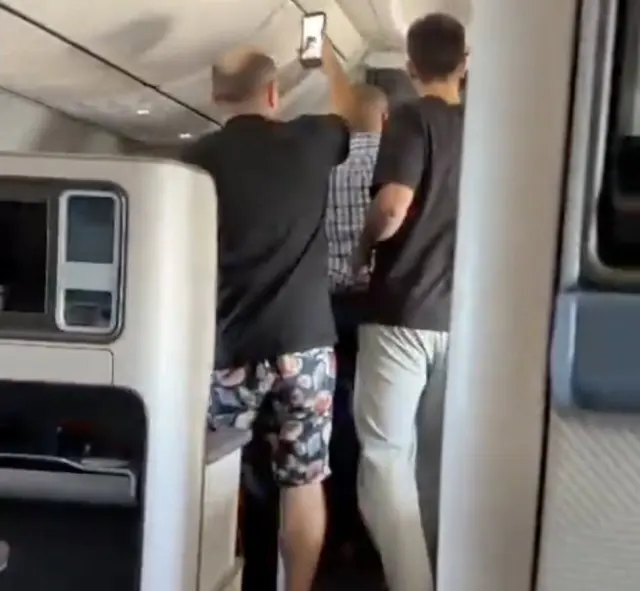

A flight from Dubai to Tel Aviv turned into one of aviation's scariest scenarios recently: Flydubai FZ1073 suddenly plummeted 14,000ft in under 30 seconds after, according to Israel's Prime Minister Benjamin Netanyahu, the co-pilot attacked Cpt Machchhar with an axe or by stabbing him, then tried to take control of the aircraft. Passengers reportedly dragged him out of the cockpit and restrained him, and the plane landed safely with all 174 people on board unharmed.
So how does someone entrusted with a commercial flight deck end up allegedly attempting a hijacking? Phillip Baum, an aviation security professor at Coventry University with 35 years in the field, says the uncomfortable truth is that pilot vetting is patchy. There is no universal background check system. Airlines often recruit pilots from other countries, which limits how deep any background screening can go, and while candidates typically face medical and psychological assessments plus ongoing evaluation during training, spotting ideological extremism is far harder than catching mental health red flags.
Baum also dismissed the obvious question of how a weapon got into the cockpit. He argues searching pilots for penknives is pointless, since a pilot locked inside the flight deck wouldn't need a weapon at all — a standard crash axe is onboard and far more dangerous. His broader point: security should focus on intent and behaviour rather than trying to intercept every small sharp object, which would grind airports to a halt.
The cockpit door itself is another weak point he highlights. Reinforced locking doors were introduced after 9/11 to keep intruders out, but Baum thinks that approach was flawed from the start. On this flight, Cpt Machchhar managed a final push to open the door so others could get in — a move Baum says made everyone onboard "incredibly lucky", since disarming the door normally requires flipping a switch from inside. He'd like to see an override system with a built-in delay, so cabin crew could get in when something is genuinely wrong, while still giving pilots time to sound the alarm if a crew member is being coerced.
Pilot-led attacks remain rare but not unheard of. A former Alaska Airlines pilot tried to cut the engines of a 2023 flight while riding in the cockpit jump seat, and in 2015 a Germanwings co-pilot deliberately flew a plane into a mountainside, killing all 150 aboard. Baum's takeaway for the industry: colleagues, crew and even passengers need to watch behaviour and speak up — reporting concerns about struggling or erratic colleagues is a social duty as much as a security one, and he notes the UAE airline sector generally has a solid reputation for crew support, even if nothing is foolproof.
For travellers, the practical reassurance is that this flight ended safely thanks to passengers and crew acting fast — and that such incidents remain extraordinarily rare given the millions of flights operated each year.