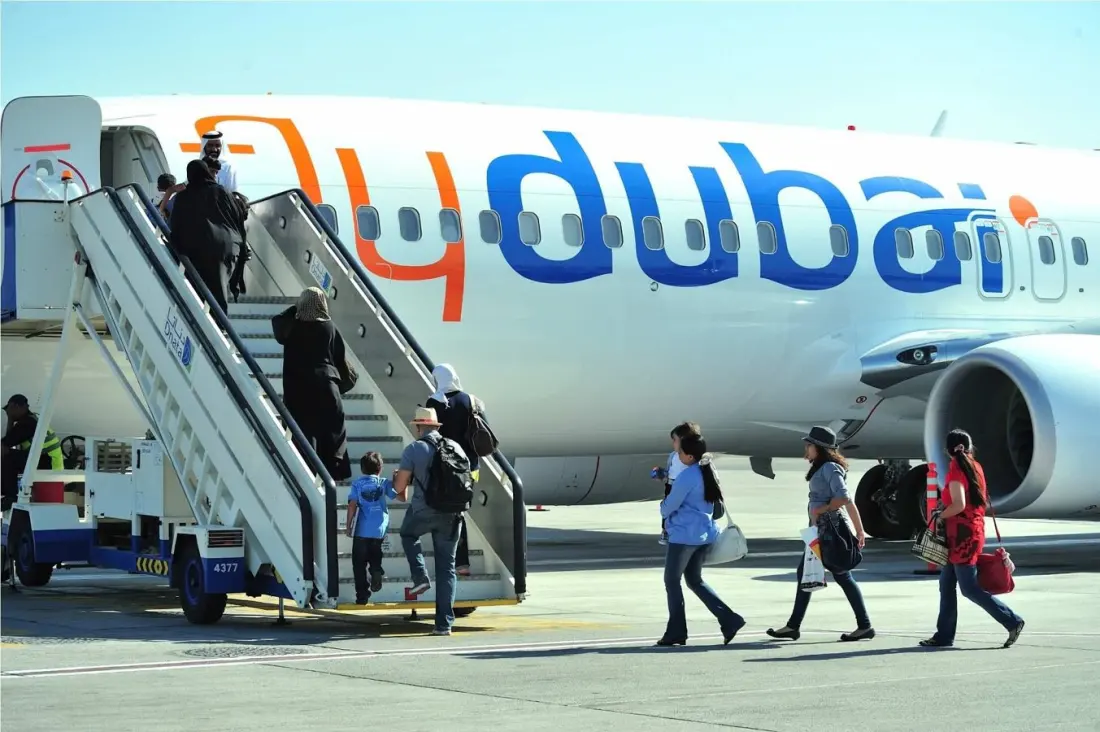
A violent cockpit incident on a Dubai–Tel Aviv flight has taken a darker turn. The first officer on flydubai flight FZ1073, who Israeli officials say stabbed the captain and tried to crash the aircraft, had reportedly already been suspended from flying by a previous employer over radical ideological views.
The flight diverted to Saudi Arabia after the attack. The wounded captain, Smit Machchhar, managed to open the cockpit door, passengers intervened, and other flydubai pilots who happened to be travelling as passengers landed the plane safely. Israeli officials say the first officer later indicated his intent was to crash the aircraft in Israel, though that remains a reported account rather than an investigative finding.
The new detail changes the story. According to the Wall Street Journal, citing people familiar with the matter, Oman had banned the first officer from flying over concerns about his radical views — and flydubai hired him afterwards. ABC News goes further, reporting from senior intelligence and law enforcement sources that he was an Oman Air co-pilot trainee in 2024 when extremist materials were found in his possession. Oman Air reportedly suspended him from flying but kept him on in an administrative role. How he then became a flydubai pilot, and why he was assigned to an Israel-bound route, is now under investigation. It is not clear whether Oman ever shared its concerns with other airlines or countries.
That gap is the real story for anyone who flies through Gulf hubs. If a pilot was grounded for extremism by one airline and then cleared into another airline's cockpit, something broke in the chain of background checks, information sharing, or both. The writer also points to a wider unease: passengers hand their lives to the people up front, and excuses for violence against civilians — whatever the politics — should disqualify someone from that responsibility, even if no law clearly says how airlines should police it. Transparency is another open question. flydubai is government-owned and Dubai has heavy stakes in its image as an aviation hub, so there is real risk the UAE-led investigation emphasises the successful diversion while skimming over the hiring failure. Some observers speculate the fallout could even accelerate a long-rumoured Emirates–flydubai merger, given the pair already share connections and a loyalty programme.
For travellers, the practical takeaway is simple but uncomfortable: the system that vets pilots across borders clearly has gaps, and no airline marketing can substitute for a thorough, honest account of what went wrong here. Anyone connecting through Dubai on flydubai or Emirates will reasonably want answers about hiring checks and crew vetting before booking with full confidence. Credit to the captain and the passengers who intervened — their actions prevented a catastrophe, but they should not become the story that ends the questions.
Story reported by Live and Let's Fly.