A Netflix-bound animated feature called Forgotten Island is doing something fun: it has invented an entire supernatural Philippine island and filled it with creatures most of the world has never heard of.
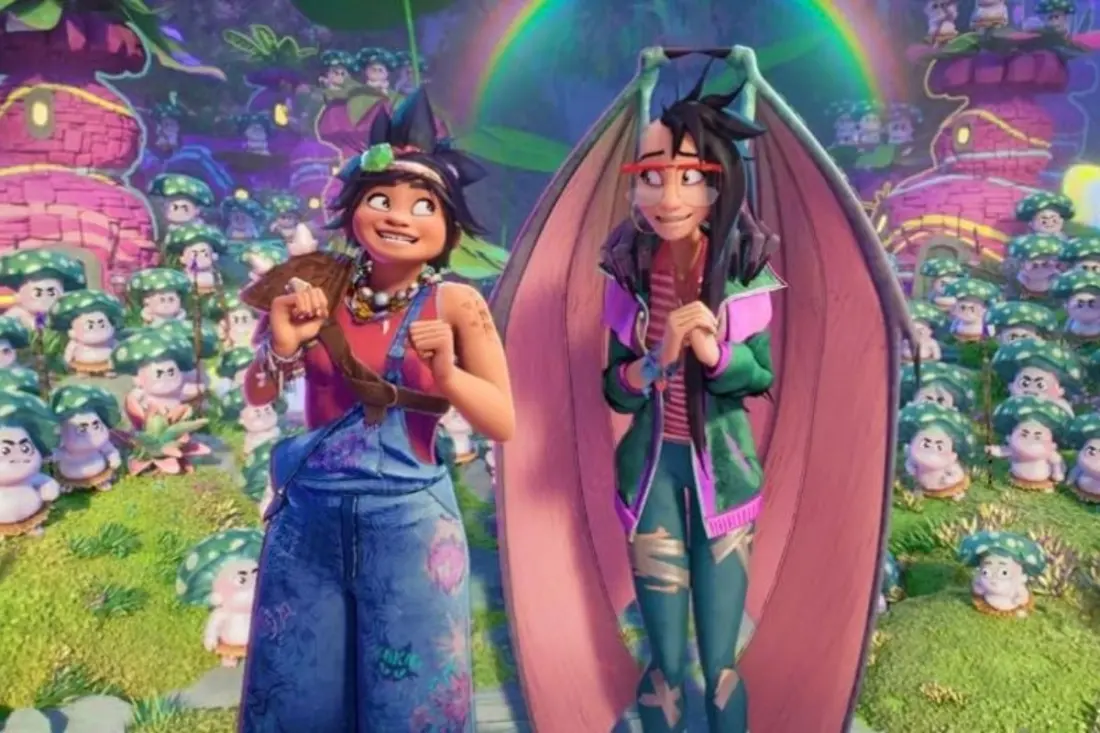
The story follows two childhood best friends, Jo and Raissa, now on the cusp of adulthood. Raissa — voiced by Liza Soberano, a genuine '90s Filipino screen icon — is about to leave for college in the United States. Jo, voiced by musician H.E.R., is a little chaotic and a lot charming. On their final night together, the pair stumble onto a portal that whisks them to Nakalimutan, the mythic island Raissa's grandmother used to tell her about. They wake up with no memory of the night before and no clue how to get home, spending the rest of the film retracing their steps.
What makes the film worth watching, beyond the hangover-style plot, is how seriously it treats Filipino folklore. The island is crawling with supernatural beings of all shapes and sizes: a tattooed wind-up demon baby, a tiny monarch named King Truffle Wuffle, a shell-necklace-wearing red robot, and, most impressively, the Dreaded Manananggal — a vampire-like figure who can sever her upper body from her lower half. Her flight and transformations are among the most technically ambitious stretches of animation in the film, and she casts a long, delicious shadow over the whole story.
The world-building is equally rich. Thousands of plants, textured backdrops and a lively street market are inspired by real local flora and vendors, and the island itself doubles as a reverent nod to an ancient burial place. The animation style hops between looks, with flashback sequences rendered differently depending on whose memory we're seeing — and the lead characters have a fun '90s vibe baked into their design. Directors Joel Crawford and Januel Mercado (of Puss in Boots: The Last Wish fame) keep it all moving at a breezy clip.
There's even a linguistic easter egg worth knowing before you watch: 'Tara na', the phrase the girls keep trading, translates to "let's go" in Tagalog. It's both a plot device and an invitation — to the audience as much as between the friends.
For travellers, the appeal is obvious. Anyone who has wandered a Manila street market or heard a relative whisper about aswang or tikbalang will feel the film's roots immediately, and viewers who haven't will come away genuinely curious about the mythology behind the monsters. The Philippines' islands, festivals and folk traditions make a rewarding trip, and Forgotten Island works as a charming primer — a warm, funny gateway into a culture's supernatural imagination ahead of its 2026 release from The New York Times Company's animated outfit.