The weather services that issue tropical cyclone warnings across the Pacific islands have raised just $34 million of the $200 million they say they need, and the gap is raising uncomfortable questions about how reliably forecasts will reach travellers and locals over the next decade.
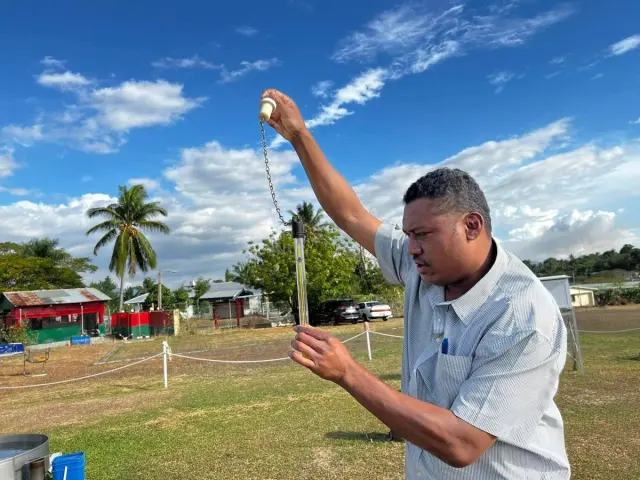
The money is tied to Weather-Ready Pacific, a ten-year programme running from 2027 to 2036 that aims to rebuild national meteorological services across the region. Salesa Nihmei, who leads the climate science programme at SPREP, the Pacific's regional environment agency, laid out the problem bluntly: most island governments spend 70 to 80 percent of operating budgets on salaries, with utilities eating most of what's left. That leaves roughly a tenth for equipment, maintenance and fieldwork — which is why weather observation networks across the region are quietly decaying.
The capacity gap is real. Several Pacific nations can't produce their own forecasts at all and depend on Fiji's regional meteorological centre in Nadi, which issues warnings during cyclones. The long-term plan is for more countries to handle their own forecasting, but that means hiring specialist staff — radar engineers, professional forecasters, climate modellers — in a region where trained people routinely leave for better-paying jobs elsewhere.
There are some workarounds on the table. Switching weather stations to solar power and electric vehicles would cut electricity and fuel bills, freeing cash for actual forecasting work. A shared forecasting platform hosted in Fiji is also in the works, alongside efforts to blend scientific forecasts with traditional knowledge so warnings make sense at village level.
Politically, the region is pulling in the same direction: ministers responsible for meteorology endorsed the One Pacific Meteorology Programme Framework at a meeting in Nuku'alofa, Tonga, designed to stop donors and agencies duplicating each other's work. The stated ambition is that eventually no lives are lost to Pacific weather events.
For anyone planning a trip to Fiji, Vanuatu, Samoa, Tonga or their neighbours, this is background worth knowing rather than a reason to cancel. Cyclone season runs roughly November to April, and warnings currently flow through established channels — Nadi's centre for many countries, national services elsewhere. But the funding crunch explains why travellers should never rely solely on a hotel's word that everything is fine. Check forecasts directly from official sources, register with your own government's travel advisory system, and build flexibility into itineraries during cyclone season: flights and ferries across the islands get grounded with little notice when a system approaches. The infrastructure behind those alerts is being stretched thin, so a bit of self-reliance goes a long way.