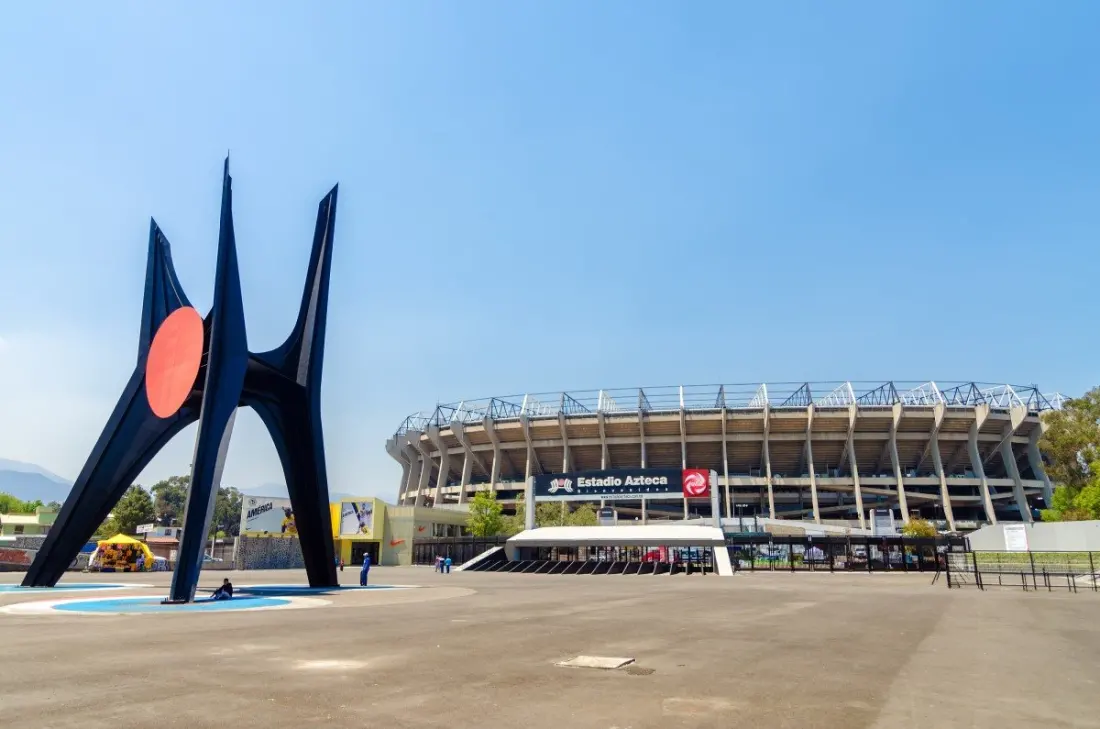
A few football venues carry as much history as the giant concrete bowl in the south of Mexico City. The stadium known to generations as the Azteca — officially renamed Estadio Banorte — holds more than 100,000 spectators and has hosted two men's World Cup finals, in 1970 and 1986. It also serves as the home ground for Mexico's national team, which makes it an easy add-on to any trip to the capital.
These days the tenant list is shorter than it once was. Necaxa relocated to Aguascalientes years ago, taking its loyal fanbase north. Cruz Azul, the reigning champions, play there, as do Club América — nicknamed las Águilas, the Eagles. Atlante, long based in Cancún, returns to the first division next season and will join them.
Understanding América is key to understanding Mexican football. The country's fans famously split into two camps: those who support América, and those who support whoever is playing against América. The animosity is partly tribal — Televisa's long association with the club earned it a reputation as the team people love to hate, complete with conspiracy theories about friendly referees. Notably, Televisa spun the club off in 2024, along with the stadium and some gambling halls, so the old grievances are losing their footing. Outside the América orbit, Guadalajara is the second most popular club nationwide, while Pumas — the team of the National Autonomous University (UNAM) — tends to be the choice of the intelligentsia. Admitting to being an América fan among Pumas supporters can earn you a look that says you probably also watch soap operas.
The spectacle is worth it regardless of allegiance. A big match draws 60,000 to 80,000 fans, and the noise and colour are as much a part of a Mexico City visit as its museums and markets.
Practical advice matters here. Do not arrive an hour before kick-off expecting to buy tickets at the gate. Latecomers end up paying touts at least 50% over face value for ordinary matches, and double or more for clásicos like América versus Guadalajara or América versus Pumas — with the added risk of fake tickets that will be rejected at the turnstiles. The stadium box office, la taquilla, is notoriously slow, with long queues and limited availability, so even determined walk-up buyers often miss the opening half hour. The simple solution: buy ahead through Fanki, the platform that sells tickets for events at the stadium.
For travellers, this is a low-effort, high-reward cultural outing. The stadium sits on Calzada de Tlalpan in the city's south and is reachable by metro, and an afternoon there delivers an authentic slice of Mexican passion for its national sport — whether you leave as one of las Águilas' own or, like most of the country, cheering against them.