
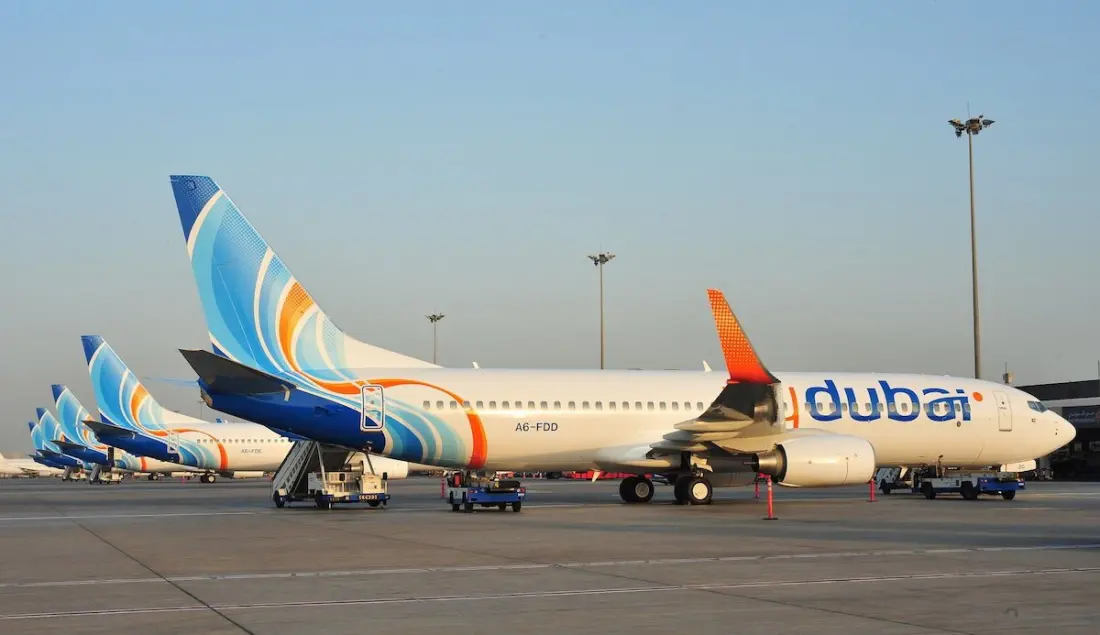
New reporting has filled in a disturbing backstory to one of aviation's scariest incidents this year. The flydubai first officer who attacked his captain mid-flight and tried to crash the aircraft had reportedly been banned from flying by his own country long before he ever stepped into a commercial cockpit.
The incident happened earlier this week on a flydubai Boeing 737 flying from Dubai to Tel Aviv, with nearly 200 people on board. According to the Wall Street Journal, the Omani first officer had adopted radical ideological views, prompting Omani authorities to bar him from flying there. It is not yet known whether Oman passed those concerns on to other governments or airlines, and the UAE — which is leading the investigation — has stayed quiet, saying only that it won't prejudge the outcome. Israeli Prime Minister Benjamin Netanyahu has stated plainly that the attacker was radicalised and intended to crash the plane.
What saved everyone was a mix of luck and quick thinking. The captain, wounded in the attack, managed to get the cockpit door open, and passengers stormed in to subdue the first officer. Commentators have pointed out that a more disciplined attacker — say, locking the door while the captain stepped out — could have succeeded completely. The captain's decision to open that door, injured as he was, likely saved everyone on the plane and possibly people on the ground too.
The open questions are uncomfortable ones. Was the pilot radicalised years ago, meaning screening should have flagged him? Did Oman share what it knew? Did flydubai's background checks fall short? With the UAE government leading the probe and owning the airline, outside observers doubt the public will ever get a fully transparent account.
For travellers, the timing compounds an already shaky year for Gulf aviation. The regional conflict involving Iran has dented confidence in the Gulf's big hub airports, and this incident cuts deeper than a temporary closure ever could. Many people who might never choose flydubai directly still book a codeshare segment with it via Emirates, so the reputational fallout spreads well beyond one carrier. Some analysts are already speculating whether this pushes Emirates and flydubai closer together — even toward a full merger — much as Germanwings was folded into Eurowings after its own 2015 pilot attack. Given flydubai's huge aircraft order book, a quiet rebrand or consolidation is plausible, though nothing has been announced.
If you have upcoming travel through Dubai or on flydubai metal, there's no operational change to act on right now — flights are running and the investigation is ongoing. But it's a fair moment to check whether your itinerary includes codeshare segments on carriers you didn't actively choose, and to follow official updates rather than rumour as the inquiry unfolds. The bigger story to watch is what, if anything, changes in pilot screening and mental-health vetting across Gulf carriers in the months ahead.