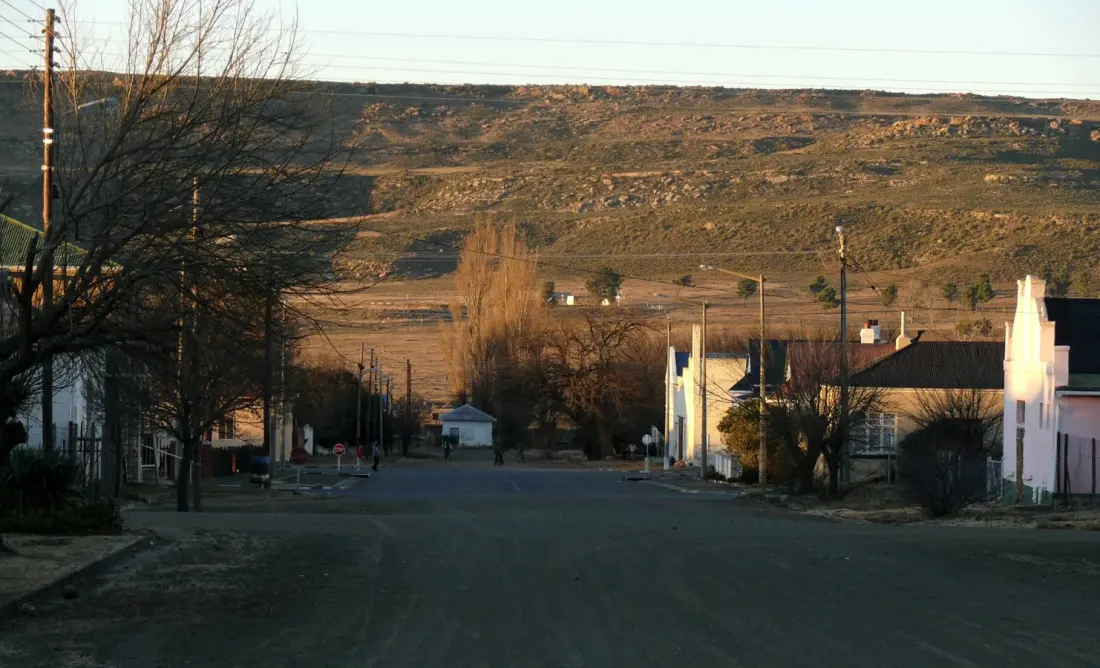
Molteno sits high in the Eastern Cape at about 1,500 metres, dwarfed by the Stormberg Mountains and easy to drive past if you're rushing between bigger names. That would be a mistake. Founded in 1874 as a coal-mining settlement, the town later became a key rail link for the isolated interior, and its streets still tell that story in local sandstone, old stations and wide mountain light.
Start with a slow walk through the older streets. The Old Mill dates to the town's founding year, and the Molteno Museum — housed in the former stone library building — covers Stone Age artefacts alongside the town's settler and mining past. Opening hours can be irregular, so check ahead. The railway station is the real anchor: the line reached Molteno in 1884 and by 1892 ran through to Kimberley, carrying Stormberg coal to bigger markets. Now one of South Africa's oldest stations, it declined with the freight trade in the 1980s and 90s before being restored and reopened in 2007.
Lunch is a small-town affair — places like Makhosi Diner's serve locals and travellers alike — and there's no reason to hurry it. The afternoon belongs to the mountains. The Stormberg's high grasslands and sandstone outcrops hide rock art, fossils and Anglo-Boer War remnants, though many heritage sites sit on private land and need local guidance or permission. Ask in town rather than exploring on your own.
Stay the night instead of treating Molteno as a roadside stop. Options include Molteno Guesthouse, Shagun Guesthouse and Stay @ Molteno Guesthouse in town, or Klipfontein Farm House for a self-catering farm stay nearby. Evenings here are defined by quiet, and sunset warms the peaks into good photography territory. On a clear morning, a final drive around the town's outskirts shows off the texture of the highland plains before you move on.
Molteno won't compete with the Eastern Cape's headline attractions, and that's the point. Its appeal is cumulative — coal history, rail remnants, stone buildings and a mountain horizon — and it rewards travellers who give it a full day rather than a passing glance. It's a natural fit for road-trippers crossing the Eastern Cape, anyone interested in South Africa's frontier and railway history, or photographers chasing cold, clear highland light. Winter visitors should pack for proper cold: snow is possible on the surrounding mountains.