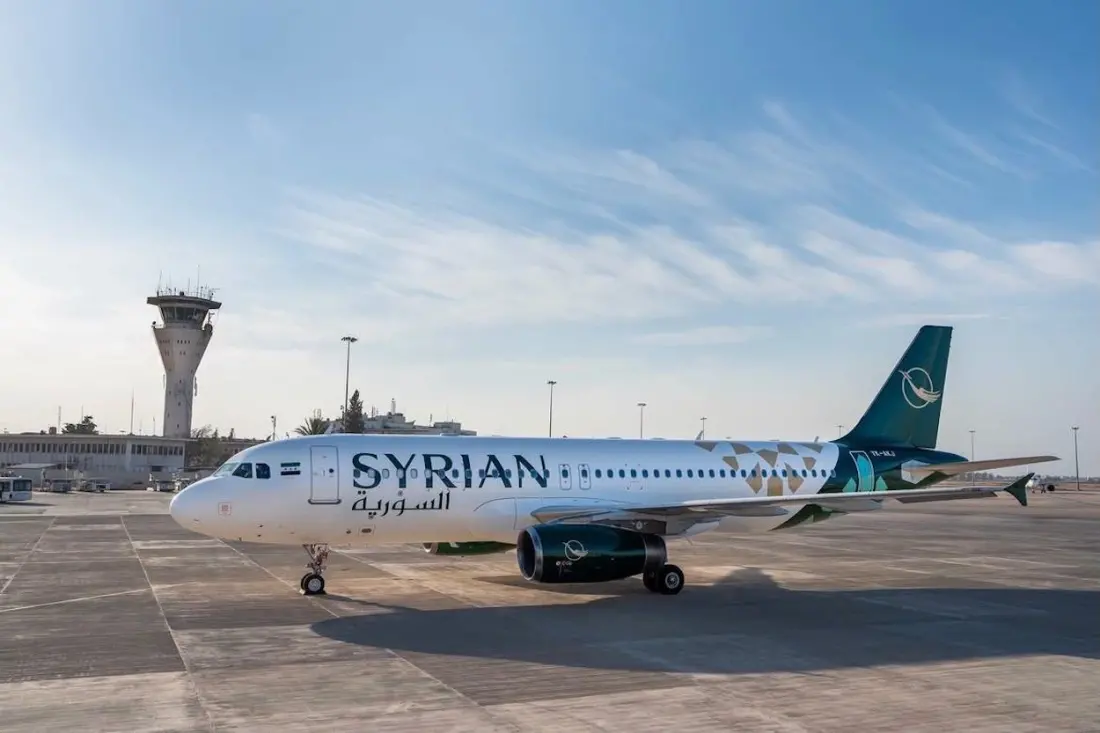
Syria's national carrier has a new identity — and it's the clearest sign yet that the country is working to reconnect with the outside world. On October 5, 2026, Syrian Airlines unveiled a green and olive livery with a gold bird emblem at a nighttime ceremony at Damascus International Airport, complete with a light show and a guest list of government officials and diplomats, according to state news agency SANA.
The rebrand is more than a paint job. The airline has dropped "Arab" from its old name, Syrian Arab Airlines, and now goes by Syrian Air or Syrian Airlines. The familiar blue branding — long a favourite of aviation watchers — is gone, replaced by a look that reads considerably more modern.
The timing matters. Last month the carrier relaunched flights from Damascus to Amsterdam, Copenhagen and Vienna, its first European services in years, with routes to Germany and France in the planning stages. Moscow remains a longstanding destination. Anwar Akkad, CEO of parent company Syrian Aviation Holding, says the airline currently flies six aircraft and wants to double that fleet by the end of 2026, while growing to 25 destinations by year-end.
There's also a practical side to the overhaul that frequent flyers of struggling carriers will appreciate. Syrian Airlines is building a mobile app and digital self-service tools, modernising its booking and payment platforms, and launching a new reservation system in November. For years, buying a ticket on the carrier reportedly meant old-school channels like travel agents — hardly workable for an airline courting European passengers. Fixing that is arguably as important as any livery.
The stakes go beyond aviation. Restoring direct air links means Syrians abroad can visit family without stitching together complicated overland routings, and businesses can more easily reconnect with suppliers and customers. For adventurous travellers, Damascus — one of the oldest continuously inhabited cities on earth — is quietly reappearing on the radar, and the flag carrier's revival makes a trip considerably easier to plan.
Caveats remain. Six aircraft is a small fleet, the route map is thin, and the ambitious year-end targets for fleet size, destinations and a new reservation system will all need to actually happen. A smart new coat of paint is the easy part; consistent schedules and decent service are what will make passengers book again. But after years of isolation, a national carrier with European routes, a modern brand and a digital roadmap is a genuine milestone — and one worth watching if Syria is on your travel list.