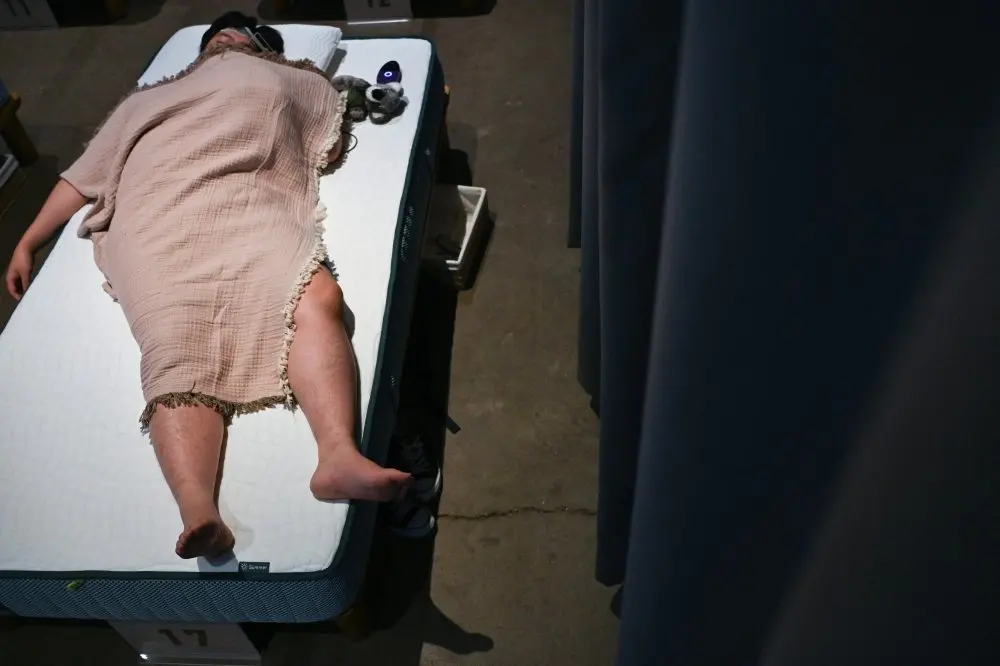
Japan has a new kind of competition, and the goal is to do absolutely nothing — as fast as possible. In early October, dozens of self-described competitive sleepers gathered in Tokyo for "Matt Race", a napping contest organised by mattress maker Koala Sleep Japan, where the challenge was to fall asleep quickest and sleep most soundly within a 90-minute window.
Participants were fitted with sleep-tracking monitors on their heads and settled onto mattresses in a dimly lit room, some accompanied by stuffed toys. The judging was simple: the winner was whoever dropped off fastest and slept deepest. The top prize was a hefty ¥2 million — roughly RM52,000 — which the champion, a woman who goes by the nickname Suimii, said she would put toward moving out on her own and buying what she described as a bed fit for a princess.
The quirky event has a serious backdrop. Japan consistently ranks as one of the world's most sleep-deprived nations. OECD figures from 2021 showed Japanese adults averaging just seven hours and 24 minutes of sleep a day — the shortest of any member country — a problem blamed on long working hours, lengthy commutes and a nightlife economy that keeps cities humming late into the night.
Organisers say the point isn't really the prize money. Riichiro Nakama, creative director at Koala Sleep Japan, said staging sleep as a public event encourages people to actually rest and builds wider interest in sleep health. One participant, 32-year-old Chisato Honda, summed up the mood: the 90 minutes flew by, and it was, in his words, a happy competition.
For travellers, there's a genuine takeaway here. Japan's sleep culture is part of what makes the country fascinating to visit — from capsule hotels and overnight business hotels designed for quick rest stops, to nap cafes and the everyday sight of commuters dozing on trains without fear of missing their stop. Public attitudes toward sleeping in shared spaces are remarkably relaxed, which can come in handy on a long-haul trip or a slow afternoon in a Tokyo park.
It's also a reminder of how tired the city around you is likely to be. If you're visiting Tokyo, you may well notice the same rhythms that produced this contest: early trains packed with workers, shops open late, and a general sense that rest has to be fought for. Whether Matt Race becomes a recurring event or a one-off stunt, it's a characteristically Japanese blend of efficiency, eccentricity and wellbeing marketing — and a fun story to know if you find yourself nodding off on a park bench in Shinjuku and someone suggests you're just training for next year's competition.