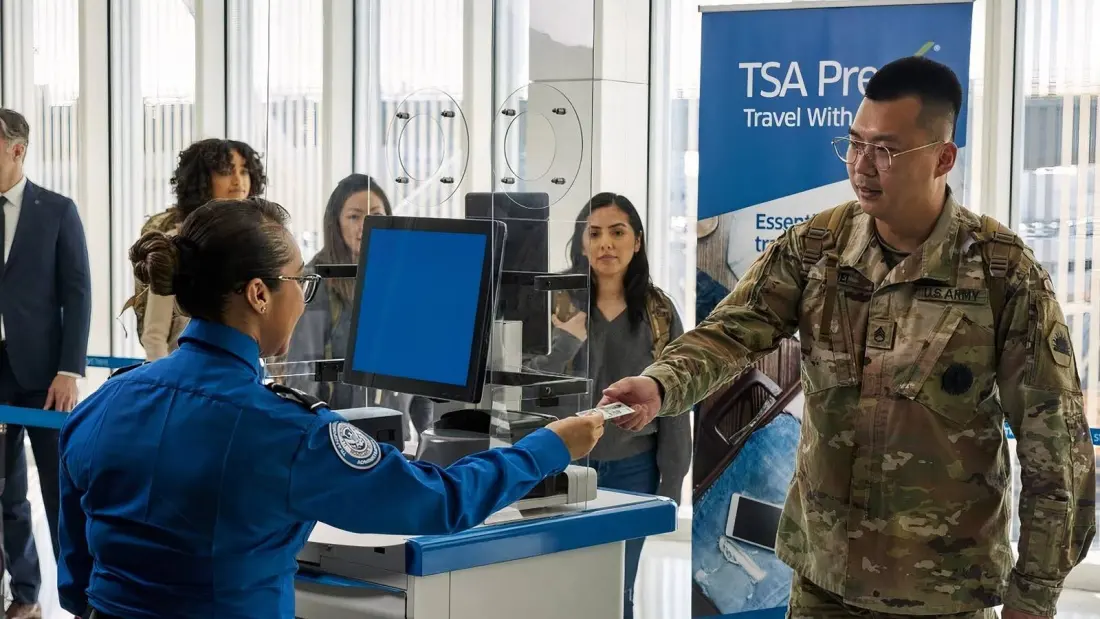
A quiet policy change at US airport checkpoints has turned into a labour fight with real implications for anyone flying in America. On September 25, TSA management ordered all chairs removed from document-screening positions at airports nationwide, leaving officers to stand for entire shifts on hard floors — in most cases with only thin mats as compensation.
The union representing these officers, the American Federation of Government Employees (AFGE), which covers more than 820,000 federal workers, says it was never consulted. Spokesperson Johnny Jones described the chairs as basic ergonomic and safety support for people who spend all day on hard surfaces, and said the response from members has been comparable to what the union sees during government shutdowns. Officers arrived at work to find everything normal, he told The Guardian, then watched the chairs disappear mid-shift. The union has launched a public petition to restore them, which had passed 1,000 signatures within days, and is encouraging members to lobby their congressional representatives.
There's a health case here too. The National Institutes of Health links prolonged standing at work to lower back and leg pain, cardiovascular problems, fatigue and even adverse pregnancy outcomes. And it's not just the ID-checkers: nearly every role at a checkpoint involves being on your feet, from officers conducting pat-downs and wand searches to behaviour detection officers walking the queues and screeners physically searching flagged bags. The one other seated role, X-ray baggage screening, remains seated only because the machine manufacturers recommend it. Airport work more broadly — check-in agents, gate crews, baggage handlers — tends to be standing work too, often across back-to-back flights with few breaks.
The union's argument is blunt: nobody who works a checkpoint asked for this, and nobody who flies asked for it either. The petition page claims the change has nothing to do with security and everything to do with making the job less bearable.
Why should travellers care? Because checkpoint morale and staffing directly affect how long you wait in line. The US saw this play out earlier this year, when TSA officers worked 76 days without pay during a government shutdown. Security lines snarled nationwide as call-outs mounted, and although back pay eventually came through, hundreds of officers quit. A policy that makes an already demanding job more painful risks pushing more people out of the profession — and shorter staffing means slower screening for everyone. Frequent flyers may also notice the change firsthand: a distracted, fatigued officer at the podium is nobody's idea of better security.
For now, the chairs are gone and the fight is on. If you want to weigh in, the AFGE's petition is open to passengers, and the union suggests contacting your representatives as the most direct route to reversing the policy.