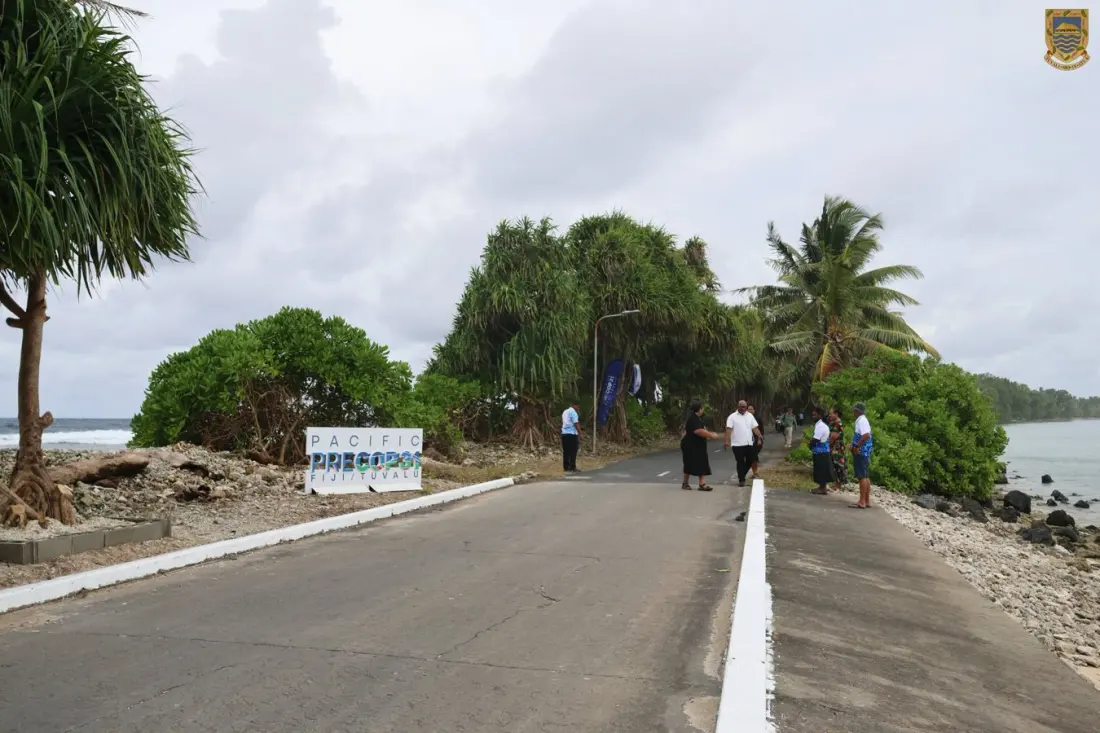
Tuvalu, one of the smallest and lowest-lying countries on Earth, recently used a high-profile visit to make a point no briefing paper could. During a two-day stop tied to Fiji's Pre-COP gathering, visiting leaders were taken straight to the Funafuti Causeway — the narrowest point on the main island, where the ocean's proximity to daily life is impossible to miss.
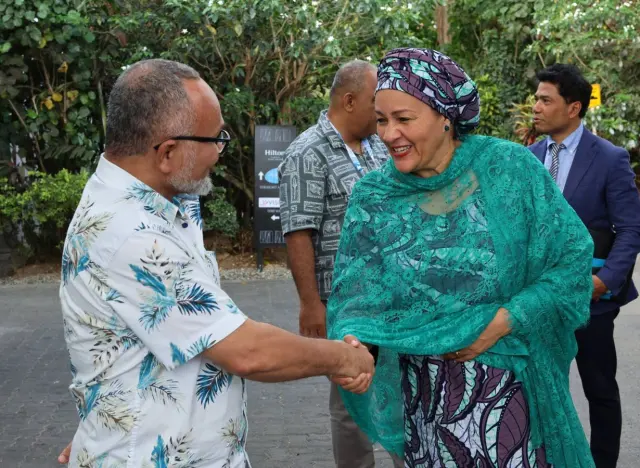
The delegation, part of preparations for the COP31 climate talks, received a full welcome. Foreign Affairs Minister Paulson Panapa greeted them on arrival, with a parade from the Tuvalu Police Service and a traditional chant performed by pupils from SDA Primary School and Nauti Primary School. Prime Minister Feleti P. Teo later welcomed the group formally, and the Funafuti island community staged a cultural performance.
But the heart of the visit was diagnostic rather than ceremonial. Alongside the causeway, the leaders were shown David's Drill, a historic site in Funafuti, and passed Fetuvalu Secondary School, whose students waved the convoy through. At each stop, the message was the same: Tuvalu's limited land area and low elevation put it on the frontline of rising seas, and the country is working on resilience and practical solutions worth international support.
Teo and Climate Change and Environment Minister Maina Vakafua Talia framed the Leaders' Segment as a chance for decision-makers to see the vulnerabilities firsthand. "From Tuvalu's frontline to the Pre-COP discussions in Fiji and the road to COP31, Tuvalu's message is clear: the realities facing our islands must be seen, heard and reflected in meaningful action," the Prime Minister said.
For travellers, the story doubles as an introduction to one of the world's least-visited nations. Tuvalu sits roughly midway between Hawaii and Australia in the Pacific, and tourism there is tiny, low-key and community-based — a contrast to the resort-heavy islands elsewhere in the region. A visit typically means lagoon swimming, church life, local guesthouses and the chance to walk an atoll where land is, quite literally, in short supply. Reading coverage like this before going helps set realistic expectations: this is not a polished resort destination but a living community adapting to real environmental pressure, and respectful, low-impact travel is the only kind that makes sense here.
Whether you're following the climate diplomacy or simply curious about a country most maps reduce to a dot, Tuvalu's causeway is a powerful shorthand for what's at stake — and why its leaders want the world to look closely now.