A small, free state park on Maryland's Eastern Shore packs in a surprising amount: the story of Harriet Tubman, a peaceful wildflower trail, and a gateway to one of the East Coast's great wetland landscapes.
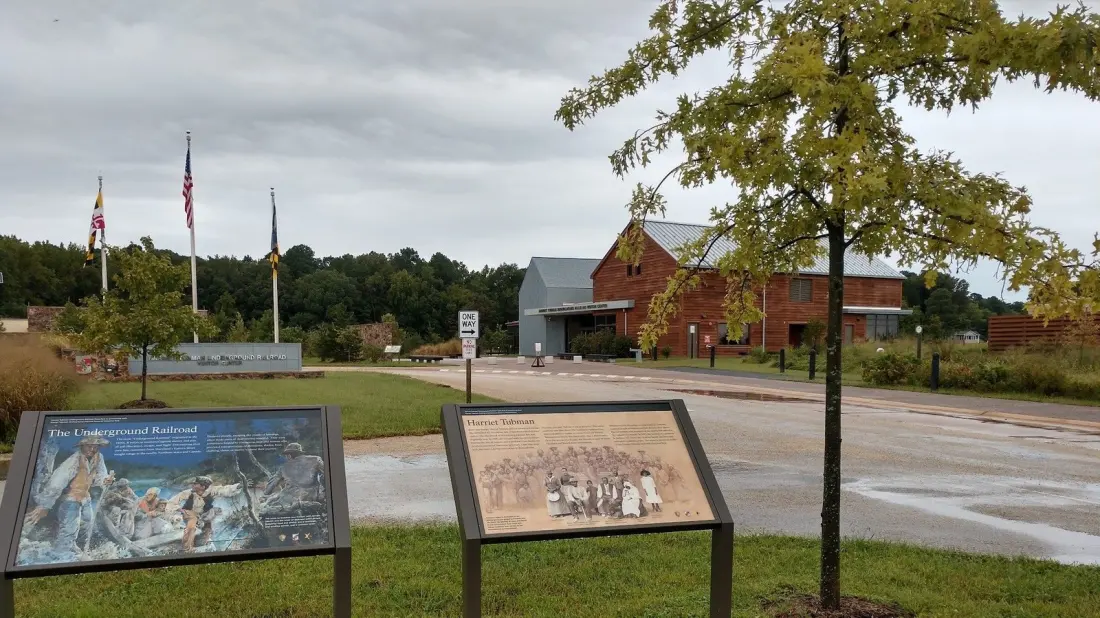
The Harriet Tubman Underground Railroad State Park sits on the Delmarva Peninsula, about five miles south of Church Creek in rural Dorchester County. Tubman was born enslaved nearby in 1822, and the area's farms, marshes and waterways shaped the route she later used to guide dozens of people to freedom. At the park's visitor center, multimedia exhibits cover her childhood in slavery, her own escape to Philadelphia in her late twenties, and her Underground Railroad work, plus rotating art shows inspired by her legacy. Admission is free, and the park is open Wednesday through Sunday year-round.
For the full picture, drive about five miles east to the site of the farm where Tubman spent her early years, marked with interpretive signs along Greenbrier Road. Roughly ten miles north, the historic city of Cambridge adds the Harriet Tubman Museum and the Beacon of Hope statue. The park also anchors the northern stretch of the Harriet Tubman Underground Railroad Byway, a 125-mile scenic drive tracing more than 30 related sites towards Philadelphia — a free audio guide is available to download.
Nature is half the draw here. The 17-acre park sits just outside Blackwater National Wildlife Refuge, nicknamed "the Everglades of the North" for its vast tidal marshes. Inside the park, the Legacy Garden loops through woods and native-plant meadows on a flat, 0.75-mile gravel trail — an easy, reflective walk where Eastern bluebirds and American goldfinches show up year-round. Spring wildflowers and fall colour are the prettiest windows; summer is lovely but bring bug spray, because the marshland can get very buggy on hot days.
Most people spend one to two hours at the park, which is honestly not enough to justify a long drive on its own — but as part of a Delmarva Peninsula trip, it works brilliantly. Three trails in Blackwater Refuge (The Woods, Marsh Edge and Key Wallace) lie a few miles east for a proper hike, and the wild horses and beaches of Assateague Island are about 90 minutes away on the Atlantic coast.
Practically speaking, this is an easy add-on for anyone road-tripping the mid-Atlantic: roughly two hours from Washington, D.C. or Baltimore, three from Philadelphia. History buffs, birders and families after a low-effort, high-reward stop will all get something from it.