A guitar competition in Berlin might seem like an unlikely showcase for Vietnamese culture, but that is exactly what it has been for two decades. The Berlin International Guitar Competition and Festival, founded and run by Vietnamese-German guitarist Đặng Ngọc Long, marks its 20th edition this year, and its long-game effect has been quietly significant: generations of international guitarists have had to learn Vietnamese music to compete.
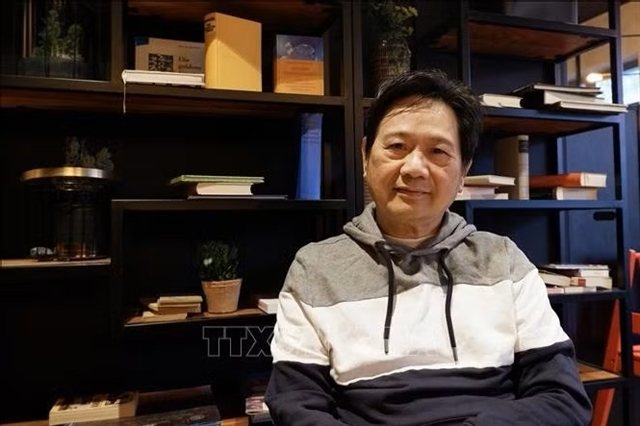
Long directs the Berlin-Gesundbrunnen Music School and made history himself in 1987 as the first Vietnamese guitarist to win a Special Prize at an international guitar competition. He has presided over the Berlin festival's jury for years, and his influence runs deeper than the trophy list. This year his own compositions were set as compulsory pieces, meaning every entrant had to engage with Vietnamese material. Thirty contestants from 15 countries signed up, with five finalists playing on October 10 at Ballhaus Prinzenallee in Berlin. The surrounding programme included a gala concert, masterclasses and a guitar exhibition.
The most interesting hook for visitors is the music itself. Long's Suite Kiều, based on the classic Vietnamese epic poem The Tale of Kiều, asks players not just to execute notes but to understand its characters and story. Contestants effectively study a cornerstone of Vietnamese literature to get through the competition round. That is cultural diplomacy with teeth — a performance, as Long puts it, works when it sends a foreign audience home wanting to learn more about Việt Nam.
The anniversary also comes with news: Long wants to stage the festival in Hà Nội, which would let young Vietnamese guitarists compete alongside international peers without leaving the country. He is also pushing for better practical support for cultural exchange — funding, travel logistics, visas and copyright arrangements — the unglamorous machinery that determines whether cross-border arts projects actually happen. His ambitions align with Việt Nam's own policy push for stronger international cultural integration, under Politburo Resolution No. 80-NQ/TW.
For travellers, this is a good example of how culture moves between countries in both directions. Berlin has one of Europe's most active classical guitar scenes, and events like this one give visitors something beyond the usual itinerary — a gala concert or student masterclass where you can hear Vietnamese folk melodies reimagined for a Western instrument, often for the price of a beer or two. If Long gets his wish, the festival's Hà Nội edition would be an even better reason to plan a trip: a chance to hear the Tale of Kiều on guitar in the city where the poem's author, Nguyễn Du, is celebrated as a national literary giant. Either way, keep an eye on the festival calendar — 20 years in, it is clearly not done growing.