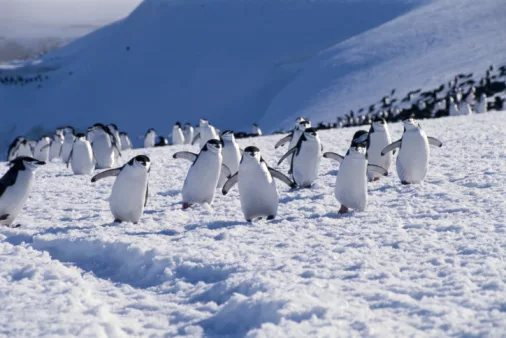
Zavodovski Island, a smouldering volcano in the South Sandwich Islands, once hosted the biggest chinstrap penguin colony on Earth — roughly 600,000 breeding birds counted in 2011. By 2025, researchers counting the same shores found about two-thirds of them gone. A study published in Current Biology calls it an enormous population crash, and it may have cost the island its title as home to the world's largest colony.
The prime suspect is a warming ocean, not the volcano. Zavodovski erupted violently in 2016, and scientists initially wondered whether ashfall had wiped out birds. But the data shows a steady decline rather than a sudden post-eruption collapse, and the penguins tended to steer clear of the worst-affected ground anyway. Researchers also ruled out competition with other penguin species, and the island's sheer remoteness — hundreds of kilometres from anything — means human disturbance was never a serious candidate.
The real problem is in the water. Chinstrap penguins feed almost entirely on Antarctic krill, and tracking data shows they forage in the cooler waters to the island's north-west, where krill have long been plentiful. As sea temperatures rise, krill are drifting south toward the Weddell Sea. That forces the penguins to travel further for food, burning energy they can ill afford during the breeding season. The Antarctic Peninsula region has logged exceptionally high temperatures in recent years, and scientists warn these shifts are happening fast.
There is one small twist: macaroni penguins on Zavodovski have grown by around 30%. They eat a more varied diet, so they can adapt when one food source moves or thins out. But their gains barely dent the chinstrap losses, and researchers compare the wider ecosystem to a giant Jenga tower — pull out one block, like krill, and the whole structure gets shakier for every species above it.
Why should travellers care? For anyone dreaming of an Antarctic expedition cruise, this is a reminder that the wildlife spectacle at the far south is genuinely in flux. Chinstrap penguins could eventually qualify for endangered species protection, which would change how — and where — ships can visit colonies. The world's most isolated wilderness is not insulated from climate change; it's one of the fastest-changing places on the planet, and the pace recorded here caught even the researchers off guard. If seeing a mega-colony of chinstraps is on your list, the window is closing faster than anyone expected.