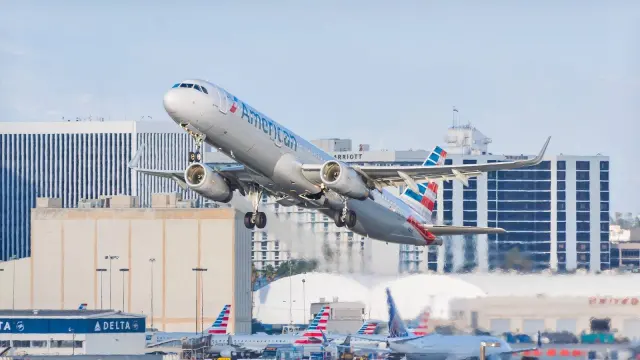
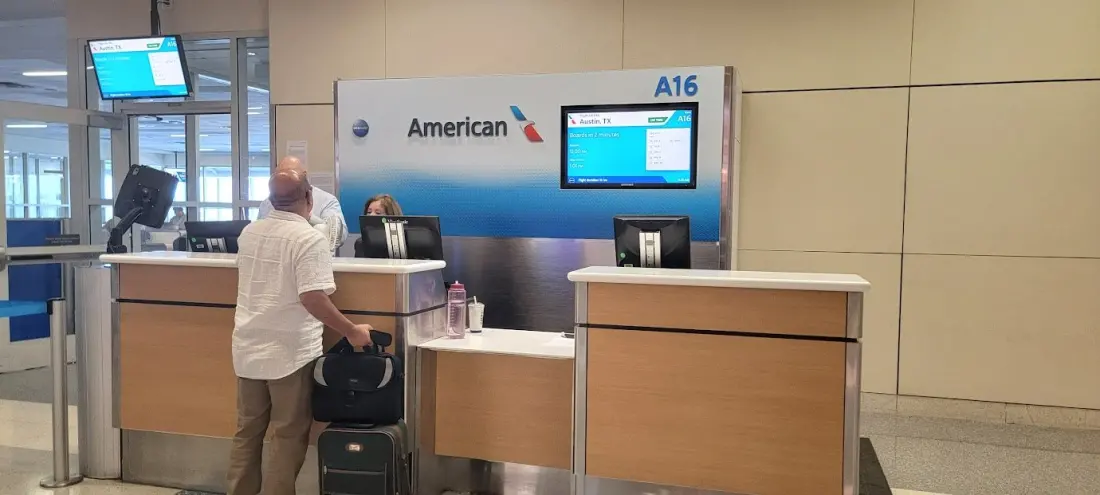
American Airlines has quietly overhauled one of the worst parts of air travel. According to an internal memo, the airline now prohibits involuntary denied boarding across its mainline and regional operations, domestic and international, effective 30 September. Gate staff are told to keep the aircraft door open — and accept a delay if necessary — until enough passengers volunteer to give up their seats.
The scale of the problem makes this a real shift. US Department of Transportation figures show American and its regional partners involuntarily bumped 14,758 passengers in full-year 2025 — about 60% of all involuntary bumps industry-wide, more than every other airline combined. Delta, by contrast, bumped nobody, accommodating over 57,000 volunteers instead. American's numbers have already been improving: involuntary bumps fell 54% year over year in the second quarter, from 4,257 to 1,953.
Two details stand out. First, the money. Previously, agents worked within preset voucher limits and needed central approval to exceed the maximum. Now station leadership at the gate can authorise higher compensation — and American has already been generous, with a reported $1,125 opening offer at a Philadelphia gate in July and a $4,000 voucher on a Philadelphia–Athens flight in June.
Second, and more unusual: volunteers can now be confirmed on the very next departure even if that flight shows no available seats. That's a benefit previously reserved for elite ConciergeKey customers. It addresses the real worry for most travellers — not the voucher amount, but whether they'll be stuck at the airport for hours on standby. Agents are even instructed to point out that an involuntarily bumped passenger would only get the next flight with open seats, while a volunteer gets a guaranteed confirmed seat.
The memo also requires early announcements explaining oversales (including when an aircraft swap or weight restriction shrinks capacity), a customer service manager on the scene, and documentation of every step — each offer increase and escalation. It's a cultural U-turn for an airline that once prized on-time departures above nearly everything else.
There's context here. After the 2017 United Express incident in which a passenger was dragged off a plane, Delta raised agent authority to $2,000 and supervisors to $9,950, and United briefly dangled $10,000 offers. Delta's former CEO Richard Anderson argued that paying volunteers generously also made business sense: a reliable product lets revenue teams sell more seats without fearing an ugly involuntary bump.
For travellers, the takeaway is straightforward. If you're flexible, oversold flights just became a genuine opportunity — ask for the voucher, the confirmed seat on the next departure, and compare it against the federal compensation you'd be owed involuntarily (which depends on your fare and delay, capped at $2,150). If you're not flexible, your odds of being forced off an American flight should now be close to zero. It's a meaningful step toward a more predictable flying experience.
Story via View from the Wing