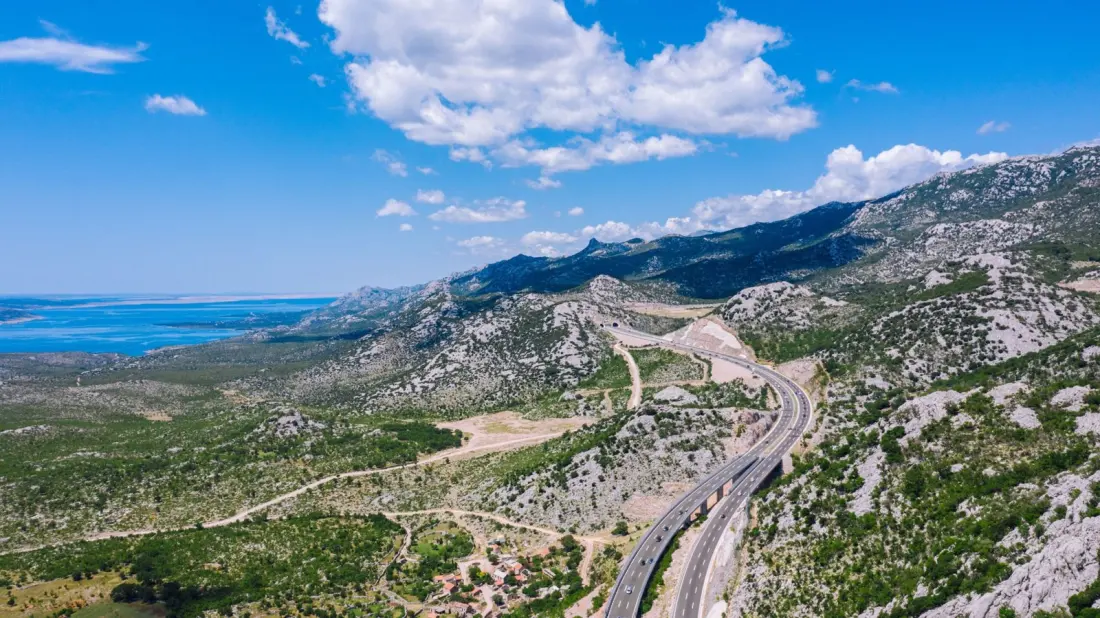
Driving down the Croatian coast with the Adriatic on one side is one of Europe's great road trips — but until now it has come with a familiar hassle: queues at toll booths, fumbling for kuna-era cards and cards, and the punch-ticket dance at every exit. That is all about to change. From 1 March 2027, Croatia's motorways will switch to fully electronic tolling, meaning no barriers and no stopping at all.
The new system covers the entire motorway network, including the sections run by HAC, Bina-Istra and Autocesta Zagreb-Macelj. Tolls will still be charged by distance travelled and vehicle category — the maths doesn't change, only how you're counted. Passage will be recorded electronically, combining existing ENC transponder technology with cameras that read licence plates automatically.
Here's how it breaks down. Light vehicles up to 3.5 tonnes will have two options: keep using an ENC device, or register for automatic number-plate recognition. Heavy goods vehicles must use an on-board device, no exceptions. The plate-reading route is aimed squarely at occasional and foreign drivers — in other words, the millions of tourists who barrel through Croatia each summer en route to Dalmatia, Istria or beyond, and who currently have no reason to hold an ENC device year-round.
The catch? The fine print isn't finished yet. Officials have confirmed the basic rules but have not yet published full details on how casual users will register their vehicles, link a payment method, or be billed after a single trip through the country. Croatian Motorways and HAC are explicit that drivers without an ENC shouldn't take any action until the official instructions appear, and the Crolibertas website will carry the definitive guidance. If you're renting a car or driving in from Austria, Hungary or Italy in spring 2027, check the official channels before you travel rather than relying on rumours or third-party resellers.
Why should holidaymakers care? Because it removes one of the last friction points of a Croatian driving holiday. No more long border-adjacent toll queues in peak season, no more hunting for cash at a barrier. But it also shifts responsibility onto the driver: in a barrier-free system, missing your registration or payment is far easier than missing a toll booth, and fines tend to follow. Anyone planning a 2027 road trip through Croatia should keep an eye on announcements in the months before the switch — the first weeks of the new system will be the time to double-check your setup.
Until then, nothing changes. ENC devices keep working, toll booths keep operating, and the coastline stays as tempting as ever. But from March next year, the drive from Zagreb to Split could finally become exactly what the postcards promise: nonstop.