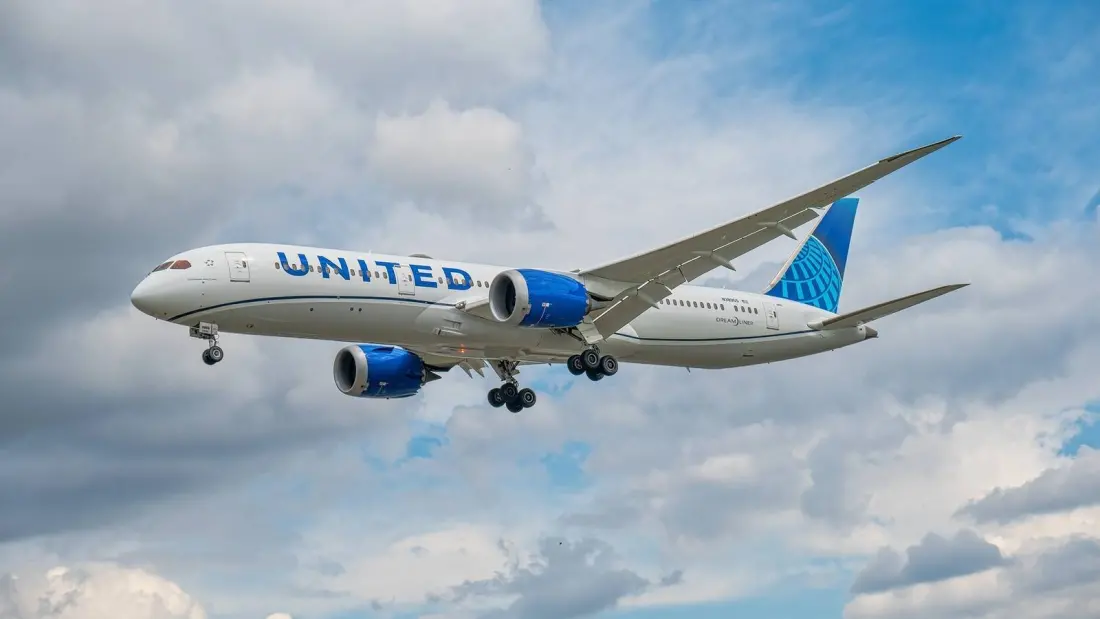
A United Airlines trans-Pacific flight ended in tragedy this week after a 71-year-old man suffered a fatal medical emergency mid-flight, prompting the captain to divert the Boeing 787-9 to Seattle-Tacoma International Airport.
The flight, UA142, was operating nonstop from Tokyo Narita to Denver on Tuesday, September 29. It left Narita at 4:38 PM, just eight minutes behind schedule, for the roughly 5,787-mile crossing. Eight hours and 22 minutes into the journey, the crew diverted to Seattle, touching down at 9:00 AM local time. Medical personnel were waiting on the ground, but the passenger — identified as Mr Felmo M. Penola — was pronounced dead at the scene. The King County Medical Examiner later listed the cause of death as hypertensive and atherosclerotic cardiovascular disease, a combination of high blood pressure and narrowed, hardened arteries that strain the heart.
After just over two hours on the ground in Seattle, the aircraft continued its journey, departing at 11:10 AM and reaching Denver at 3:12 PM. The jet involved, registration N24980, was delivered new to United in August 2020 and carries 48 Polaris business seats, 21 Premium Plus seats and 188 economy seats. It spent one night on the apron in Denver before resuming normal flying, including a nonstop to London Heathrow the following evening.
While unsettling, deaths onboard aircraft happen more often than most passengers realise, and airlines have clear procedures for them. Cabin crew are trained in CPR and in using onboard defibrillators (AEDs). If resuscitation continues for more than about 30 minutes without any sign of life, crews are permitted to stop. When someone dies mid-flight, the body is moved to a private area where possible; on a full plane, the passenger remains in their seat, covered with a blanket up to the neck, until landing. Whether to divert is a case-by-case judgement made by the captain, weighing the medical situation against distance to a suitable airport.
The incident follows a similar tragedy earlier this year, when a 22-year-old traveller died after a medical emergency on a Southwest flight bound for Los Angeles.
For holidaymakers, the takeaway is practical rather than alarming. Long-haul flights put real strain on the cardiovascular system, and travellers with heart conditions or high blood pressure should talk to their doctor before booking long routes, carry medication in hand luggage, and move around the cabin where possible to keep circulation healthy. It is also worth knowing that flight crews are well drilled for medical events: planes carry emergency medical kits and AEDs, and ground-based medical support can be consulted by radio at any point in the flight. Diversions, as this case shows, are made quickly when a life is at risk — a reminder that the person at the front of the cabin has final say on where the aircraft goes.
Condolences go to the family and friends of Mr Penola.
Simple Flying