
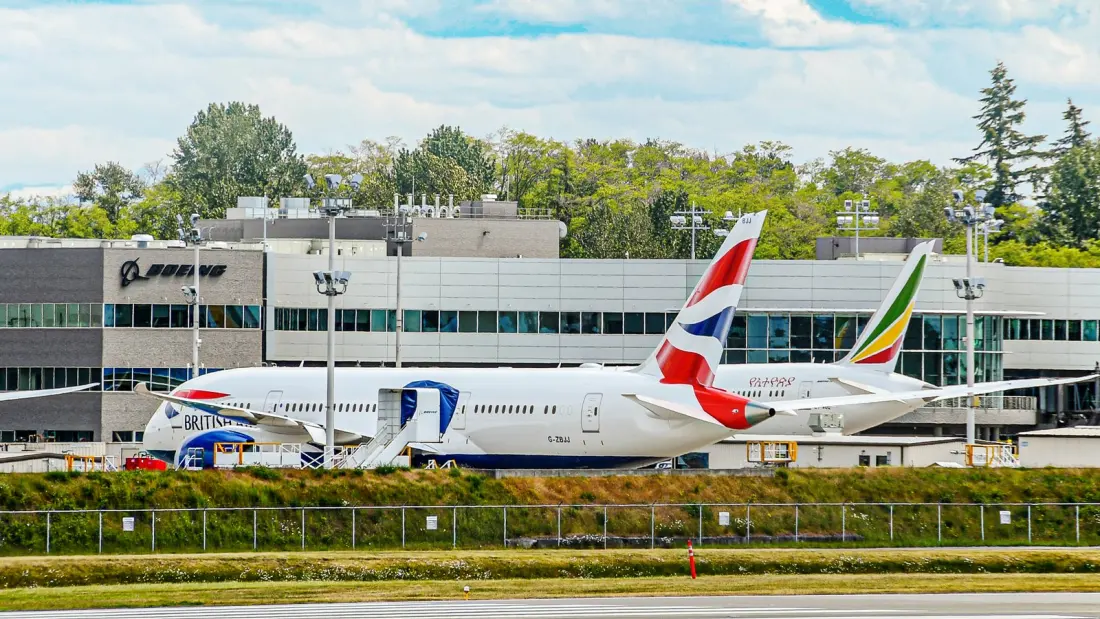
If your long-haul flight is on a Boeing 787 Dreamliner powered by Rolls-Royce Trent 1000 engines, a new European safety rule could quietly affect your travel plans over the next few years. The EU Aviation Safety Agency (EASA) has issued Airworthiness Directive AD 2026-0117R1, in force since August 19, which sets a hard limit of 7,800 flight cycles for critical low-pressure turbine discs on Trent 1000 variants across 787-8, 787-9 and 787-10 aircraft.
The rule targets micro-cracking risks in the cold end of the engine — specifically stage three discs (part number KH36323) and stage four discs (KH33943). Unlike quick gate-side fixes, checking these discs means unbolting the entire engine from the wing, shipping it to a specialist overhaul facility, and fully dismantling the six-stage low-pressure turbine. Engineers then clean the parts in chemical baths and run fluorescent penetrant and eddy-current tests for microscopic fatigue cracks. Any disc failing tolerance must be scrapped and replaced.
Here's the irony: Rolls-Royce has spent over £1 billion upgrading the engine's hot section. Its Phase One and Phase Two durability packages — 40% more cooling airflow on high-pressure turbine blades, redesigned vanes and combustor coatings — were meant to let cores run past 10,000 flight cycles, with some aircraft going up to six years between shop visits. But because an engine is only as durable as its weakest part, the 7,800-cycle cold-end cap cuts that horizon short. Airlines will pull engines off wings thousands of cycles before the upgraded cores actually need work.
For travellers, the knock-on effects are real. Airlines flying more than ten 787s on daily long-haul routes may see four or five engines in maintenance bays simultaneously, forcing them to lease spares, tighten schedules and, in a worst case, cancel or consolidate flights. Spare engine lease rates climb when many powerplants need shops at once, and global MRO capacity is already stretched. Whether Rolls-Royce can scale overhaul capacity fast enough to avoid visible disruption should become clearer through 2027, as Phase Two upgrades enter service alongside the new inspection regime.
The root cause, per industry reporting, is structural fatigue along disc rim slots and drive posts — made worse because the hotter-running upgraded cores create steeper temperature gradients across the low-pressure turbine. Software can't reliably track microscopic alloy fatigue, so the 7,800-cycle figure is a fixed wall rather than a flexible guideline.
Who should care? Anyone booked on a Trent 1000-powered Dreamliner route — think long-haul carriers across Europe, Asia and the Americas — in the coming couple of years. Most flights will be unaffected, but tighter engine availability can mean schedule reshuffles, especially during peak seasons. If your itinerary is 787-operated and tight on connections, it's worth keeping an eye on airline advisories and booking a bit of buffer. Safety always comes first in aviation; sometimes the price is a bumped departure.