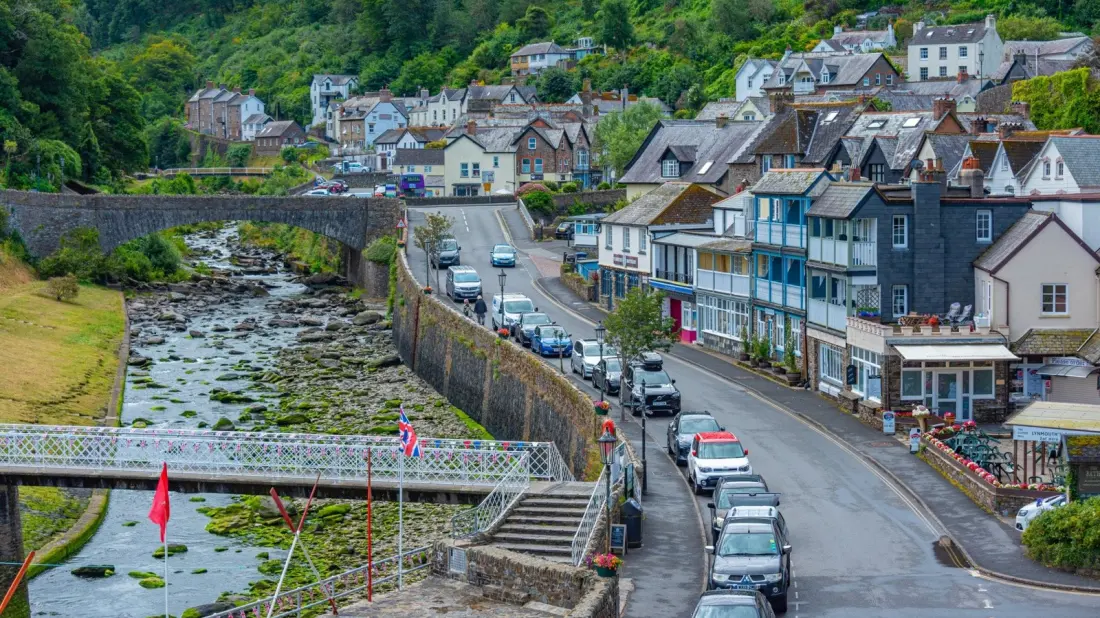
Two villages on Devon's north coast have been quietly trading on a Swiss comparison for more than two centuries. Lynton sits on a clifftop around 500 feet above the sea, while Lynmouth hugs the harbour where the River Lyn meets the Bristol Channel below. Steep, wooded valleys and craggy hills wrap around both, which is how the pair picked up the nickname "Little Switzerland" — a comparison Romantic poets made as early as 1799, when Robert Southey wrote that Lynmouth resembled a Swiss village. Whether that's poetry or just good Victorian marketing, the terrain makes a decent case.
The two towns have been connected since 1890 by the Lynton & Lynmouth Cliff Railway, a water-powered funicular that's both the practical way up the cliff and an attraction in itself. Ride it up from the harbour, then wander Lynton's winding streets, which are heavy on cafés, antique shops and small boutiques. Down in Lynmouth, you get crooked cottages, a working harbour, a pebble beach scattered with rock pools, and pubs such as The Ancient Mariner, a nautical tavern with a fireplace going in cooler months.
The headline attraction, though, stretches beyond the villages: both sit inside Exmoor National Park, one of Britain's smallest and least-visited parks, but one with an unusually varied mix of moorland, deer-populated meadows and salt-sprayed cliffs. Right on Lynton's doorstep is the Valley of the Rocks, a strange stretch of stone pinnacles where wild goats roam and the coastal path delivers proper open-sea panoramas — the bit that least resembles Switzerland and most rewards the walk.
Hikers are well served. A popular option is the 5.5-mile circular walk from Lynmouth to Watersmeet, which follows the River Lyn up through oak-filled valley paths, crosses bridges and passes several waterfalls before reaching the meeting of the rivers in a deep, tree-lined gorge. If you want more mileage, the Exmoor Classics routes go longer and harder — the Countisbury Circular covers roughly 10 miles, tracing the Lyn to Watersmeet then looping across river gorges and up to a lighthouse with views along the Devon coast.
Getting there takes a bit of effort, which is part of why the villages keep their low-key feel. Bristol Airport is the closest major gateway, about two and a half hours away by car via the M5, with plenty of low-cost European routes. Heathrow is closer to four hours' drive. By train, aim for Barnstaple, then pick up a local bus to Lynmouth and Lynton.
For travellers, the appeal is a two-for-one: a proper seaside break with harbour, beach and pubs, plus hill country walking that feels far wilder than anything else on the English coast at this scale. It suits couples after a slow weekend, walkers ticking off the South West Coast Path, and anyone who likes the idea of the Alps but would rather have a cream tea afterwards.