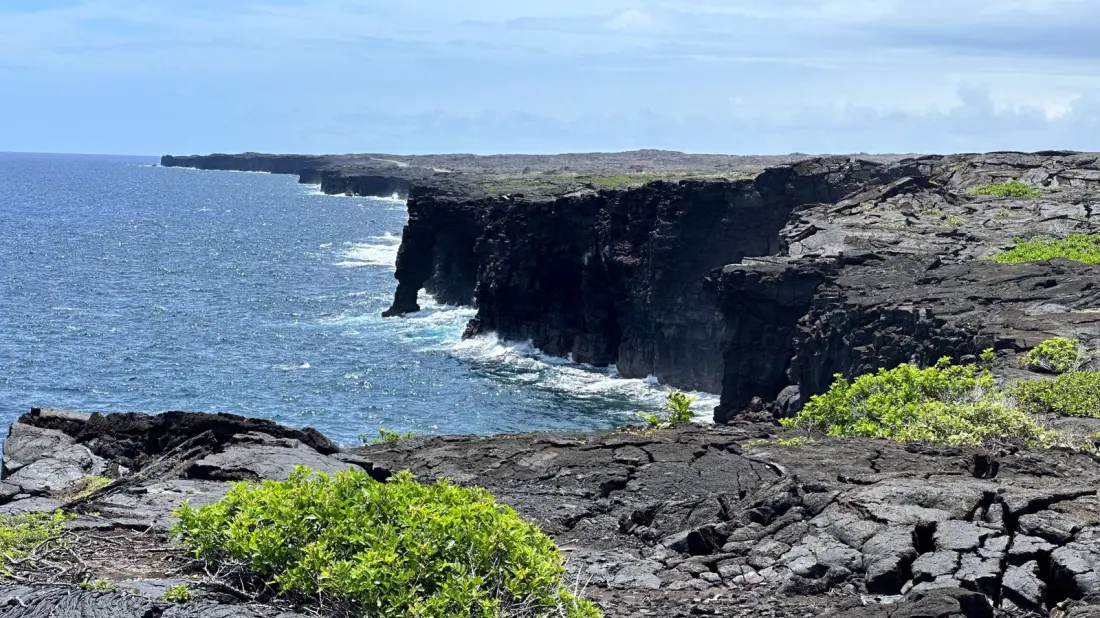
One of Hawaii Volcanoes National Park's most photographed sights is gone. The National Park Service confirmed that the Hōlei Sea Arch, a 90-foot lava formation that arched over the Pacific on the Big Island's southern coast, collapsed in late September after a run of rough weather.
The timing wasn't random. Hawaii was hit by two storms in quick succession: Hurricane Lala in August, which brought flooding and road damage to the Big Island, then Hurricane Nolo in September, which packed heavy rain and winds close to 90 mph. The park was actually closed for the storm when the arch is believed to have come down. The NPS had long noted that the arch's collapse was inevitable — sea arches are temporary by nature — but that doesn't make the loss feel small to travellers who planned entire drives around it.
The arch was the final stop on Chain of Craters Road, one of the most scenic routes in the entire US national park system. It ranked among the top things to do in the park on Tripadvisor and held a 4.7-star rating across more than 1,000 Google reviews, with visitors repeatedly calling the view worth the trek. The park's own Instagram tribute, describing the collapse as the latest transformation of its remote, rugged coastline, drew some 20,000 reactions, and comment sections filled with people mourning a sight some had stood beneath only days earlier.
Here's the thing, though: the park hasn't lost its appeal. This is still the place where you can watch Kīlauea erupt, drive through old lava fields, and camp in a wild eucalyptus forest. The Big Island more broadly has plenty of lesser-known stretches of coast and volcanic terrain to explore. What has changed is the cliff at the end of Chain of Craters Road — and rangers are now explicitly warning visitors not to approach the edge where the arch used to stand, since the rock there is freshly weakened.
For anyone with a Hawaii trip on the horizon, the takeaway is less about one lost arch and more about how national parks work: coastlines erode, volcanoes reshape roads, and the sights you assume will always be there sometimes won't be. If a specific landmark is on your list, check the park's site before you go — and maybe treat the stuff that's still standing with a bit of urgency.