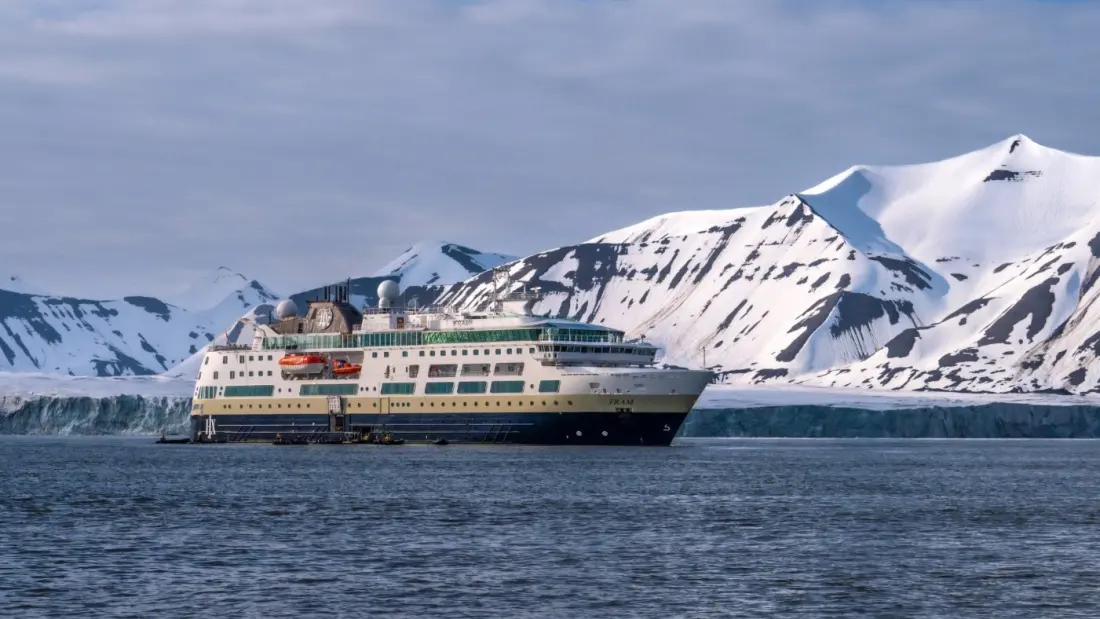
If you've ever priced up an Antarctica or Svalbard cruise, you've probably bumped into HX — the company formerly known as Hurtigruten Expeditions. It's now officially a separate business from the classic Norwegian coastal line, with the split completed in 2025. HX is headquartered in London with its own investors, and its ships have swapped the familiar red-and-black Hurtigruten livery for a new indigo-and-sand look. The upshot for travellers: Hurtigruten is the choice for the Norwegian coast; HX is the choice for expeditions.
What you're buying is quite different from a mainstream cruise. There are no theatres, formal nights or packed evening schedules. Instead, HX ships carry an Expedition Team and a Science Centre, with lectures, demonstrations and citizen-science projects on offer. Days revolve around Zodiac landings, guided walks and cruising among icebergs — often at places with no cruise terminal at all. The polar regions are the core: Antarctica, Greenland, Svalbard and the Northwest Passage, plus Alaska, Iceland, Norway, the British Isles, South America and the Galápagos, where MS Santa Cruz II sails exclusively with just 90 guests.
Ship choice matters more than you might think. MS Roald Amundsen and MS Fridtjof Nansen are the flagships, taking up to 490 guests each with hybrid propulsion, several restaurants and large observation lounges — closer to premium cruise ships than you'd expect. MS Fram holds around 200 after a 2025 refurbishment, MS Spitsbergen about 150, and the Galápagos vessel just 90. One notable absence: MS Maud has gone back to Hurtigruten as MS Midnatsol for coastal and Svalbard voyages.
Life onboard is deliberately casual — no dressing up, expedition gear over evening wear, and a whale sighting outside the window will empty the dining room faster than any show. Pricing has also shifted towards all-inclusive: most fares cover meals, drinks including a selection of alcohol, Wi-Fi, a windproof expedition jacket and standard activities like Zodiac cruises and landings. Extras such as kayaking, camping in Antarctica or partner-run excursions cost more, and flights are only included on some itineraries, so compare fares carefully rather than on headline price alone.
Two things first-timers should internalise. First, the itinerary is not a promise — ice, weather and local restrictions routinely change landings, especially in Antarctica and Greenland. Book for a region, not one specific port. Second, don't book for a guaranteed wildlife checklist. Polar bears in Svalbard are possible, never certain.
The verdict? HX suits curious, flexible travellers who care more about where they are than what's onboard — nature lovers, photographers, science and history buffs, or seasoned cruisers wanting places big ships can't reach. It's expensive, thanks to small ships and remote logistics, but the value lies in access and expertise rather than onboard facilities. If unpredictability sounds exciting rather than annoying, it's worth a serious look.