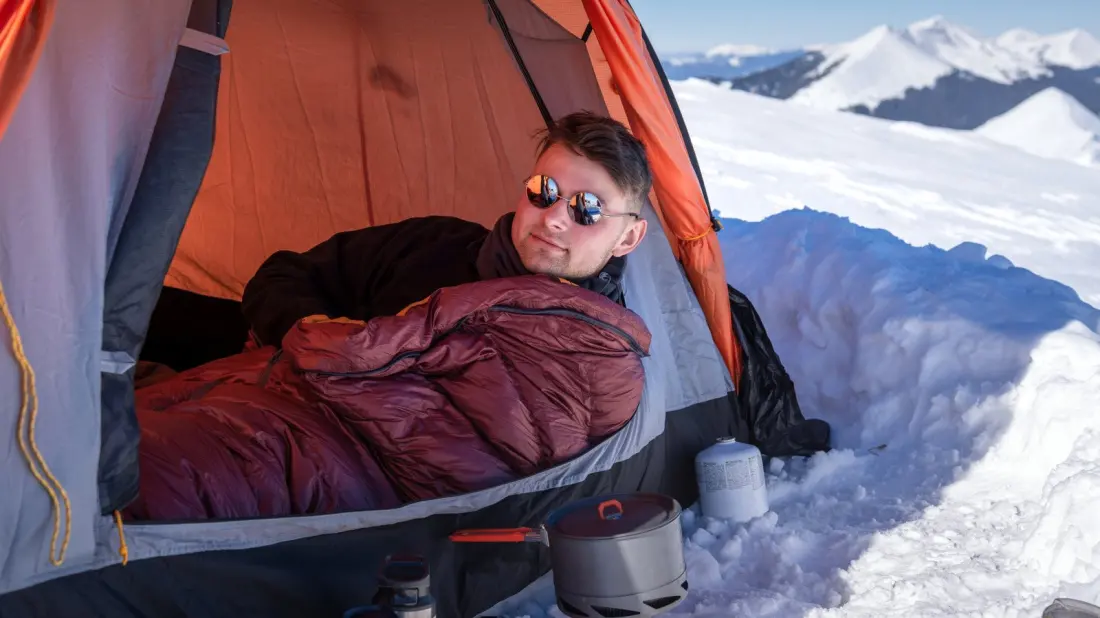
Camping in winter has real appeal — empty trails, snow-dusted scenery and quiet nights at places like Yellowstone or Acadia, where the cold keeps the summer hordes away. The catch is the night itself. Body temperature naturally dips while you sleep, which is why you can feel fine stoking the campfire at 9pm and then wake up shivering at 3am. And in genuinely cold conditions, it's not just about comfort: hypothermia sets in when core temperature drops below 95°F, so staying warm overnight matters for safety, not just sleep quality.
The trick is refreshingly low-tech: skip the pyjamas and sleep in the clean, dry base layer you're planning to wear the next day. Change into it before bed, and it does double duty — insulating you inside your sleeping bag all night, then saving you from a brutal morning routine. No stripping half-naked in a frosty tent at dawn; you simply pile your daytime layers on top and get moving. If the base layer alone isn't cutting it, sleep in more of the next day's clothes too.
It sounds obvious, but there's a specific reason it works. Clothing you've worn all day absorbs sweat and moisture, and damp fabric pulls heat away from your body fast. Changing into a fresh, dry set at bedtime is what makes the difference between a restful night and a miserable one.
Choosing the right base layer is half the battle. Merino wool is the go-to for natural-fibre fans: it wicks moisture, warms or cools as needed, and resists odour — handy if you're wearing the same set for several days between washes. Synthetics like polyester are cheaper and very durable, and they dry fast. Silk base layers exist but suit mild nights, not hard frosts.
Weight matters too. Lightweight, midweight and heavyweight options are all on the market, and freezing conditions call for heavyweight. Budget-wise, a full set (long-sleeve top plus leggings) runs roughly $40 for basic synthetics up to $300 for premium merino.
For anyone eyeing a shoulder-season or winter trip — think snowy national parks, autumn wild camping or early spring hikes — this is a cheap, zero-effort upgrade. No new gadget, just a change in the order you put your clothes on. Pack one clean base layer reserved for sleeping-and-morning duty, and cold nights stop being the thing that ruins an otherwise great trip. Credit: Explore.com.