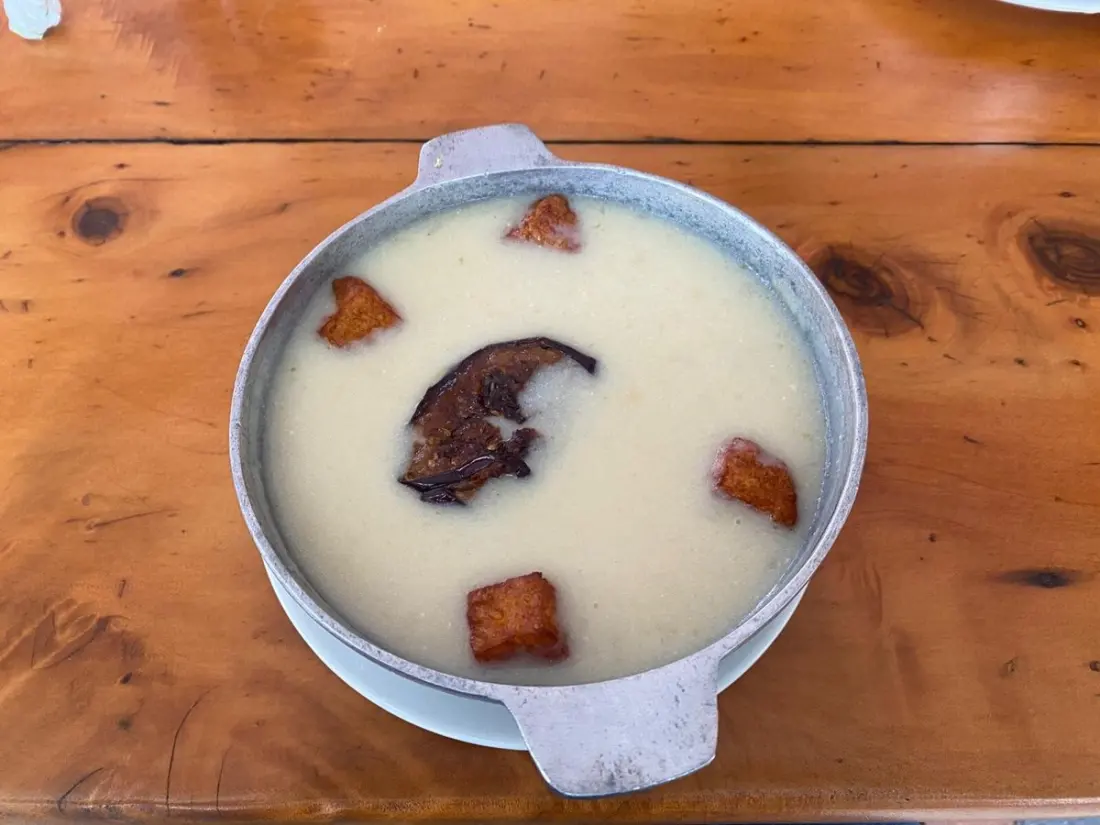
A thick, cheesy yam soup sounds like pure comfort food — and in Colombia's Caribbean interior, mote de queso is exactly that. But the story behind the dish, as preserved in regional oral tradition, is darker and stranger than its creamy texture suggests.
According to accounts documented by Señal Memoria, the soup's ancestor emerged during the Thousand Days' War, the brutal civil conflict between Liberals and Conservatives that ran from 1899 to 1902. The most common version points to Corozal, in today's department of Sucre, around October and November 1900. With fighting and food shortages forcing families off their land, residents reportedly took refuge on farms near Coloso, where supplies were thin. Yam — cheap, plentiful and filling — became a lifeline.
That wartime dish was called mote de candela: simply yam simmered with garlic, onion and salt until thick. It's worth noting that historians treat this origin story as collective memory rather than documented fact — no period records pin down the recipe's birth. But the evolution is clear enough. Over the following decades, cooks added costeño cheese and suero (a tangy fermented cream), transforming a survival food into one of the signature dishes of the Caribbean savannas, especially Sucre and Córdoba.
The ingredient list reads like a history of the region itself. Yams arrived through the food systems tied to African diasporic communities and became a Caribbean staple. Cheese and dairy come from the cattle-ranching culture that took hold across the savannas. Garlic and onion trace back to European kitchens, while eggplant connects to Syrian-Lebanese migrants who settled in Colombia after leaving the former Ottoman Empire. In one bowl: Indigenous, African, European and Middle Eastern threads, all stirred together over generations.
Today you'll find mote de queso in home kitchens, neighbourhood restaurants and festival tables from Sincelejo to Montería, and it has become a point of pride far beyond the savannas — the dish even has a social-media following of its own. For travellers, it's a genuinely regional taste: richer and heartier than the coastal seafood most visitors associate with the Caribbean coast, and best sought out in the interior towns where it originated.
If your Colombian itinerary sticks to Cartagena and Barranquilla, consider a detour inland to Sucre or Córdoba and order a bowl where the recipe was refined. It's a direct, delicious way to taste how necessity, migration and a couple of centuries of cultural mixing shaped one corner of Colombia's table.